Visit our Exhibition in Washington, DC: Jan 27 - Oct 14, 2012
Jefferson’s Monticello - Home Explore Plantation & Slavery companion websites
  • Get Email Updates
  • Sign-in
Landscape of Slavery: Mulberry Row at Monticello
  • Explore Topics
  • Meet People
  • Discover Work
  • View Places
  • Gallery
  • Visit Mulberry Row
AddThis Sign-in to Favorite Share Print
< back to Meet People

Jacob Silknitter

MaleHired White WorkersWork: Charcoal-burner

Massachusetts Historical Society

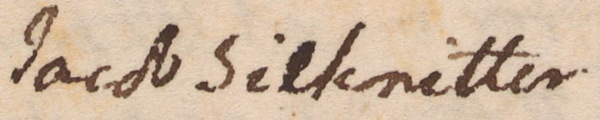
Jacob Silknitter was a charcoal-burner at Monticello from 1795 to 1797.  Silknitter, a native of Germany, was probably hired to meet the increasing demands for fuel on Mulberry Row, particularly the nailery.  Silknitter, who likely did not live at Monticello, often burned cords of wood in “kilns” for several days and nights to produce charcoal; in 1795, Jefferson “Pd. Jacob Silknitter for 17. days burning coal 68/ @ 4/.”  At least one of his sons assisted him in burning charcoal for the plantation, for in 1797 Jefferson recorded that Silknitter “has worked here 101. Days @ 4/ himself & 2/ his son.”  During his tenure at Monticello, Silknitter likely trained several enslaved workers, including Frank, James Hubbard, Cary, and David Hern.  After Silknitter’s departure, these men produced all of the charcoal needed on the plantation; Jefferson paid them “gratuities” based on the efficiency and productivity of their work.

Tags

None
Login or register to tag items

Add comment

Login or register to post comments

g.g. coal sheds

Read more about the coal sheds where the wood charcoal that fueled Mulberry Row industries was stored. More »

David Hern, Jr.

1784–after 1829 Wagoner, Nailer, Charcoal-burner, Blacksmith

Nailer, Blacksmith, Charcoal–burner, Wagoner.  1784–after 1829.  Learn more about Davy Hern Jr.’s life history. More »

Jefferson’s Monticello - Home
Facebook YouTube Twitter Flickr
  • Home
  • About
  • Press
  • Donate
  • Sponsors
  • Explore Topics
    • Treatment
    • Economy
    • Labor
    • Skills
    • Resistance
    • Family
    • Picturing Mulberry Row’s People
  • Discover Work
    • Sawing
    • Rough Carpentry
    • Joining
    • Charcoal-burning
    • Tinsmithing
    • Nail-making
    • Spinning and Weaving
    • Tending of Horses
    • Preservation of Meat
    • Dairying
    • Laundering
    • Blacksmithing
  • View Places
    • Phase I (1769 – 1790)
    • Phase II (1791 – 1809)
    • Phase III (1810–31)
  • About
    • Credits
    • Press
    • Sponsors
    • Donate
    • Visit Mulberry Row
monticello.org UNESCO World Heritage List