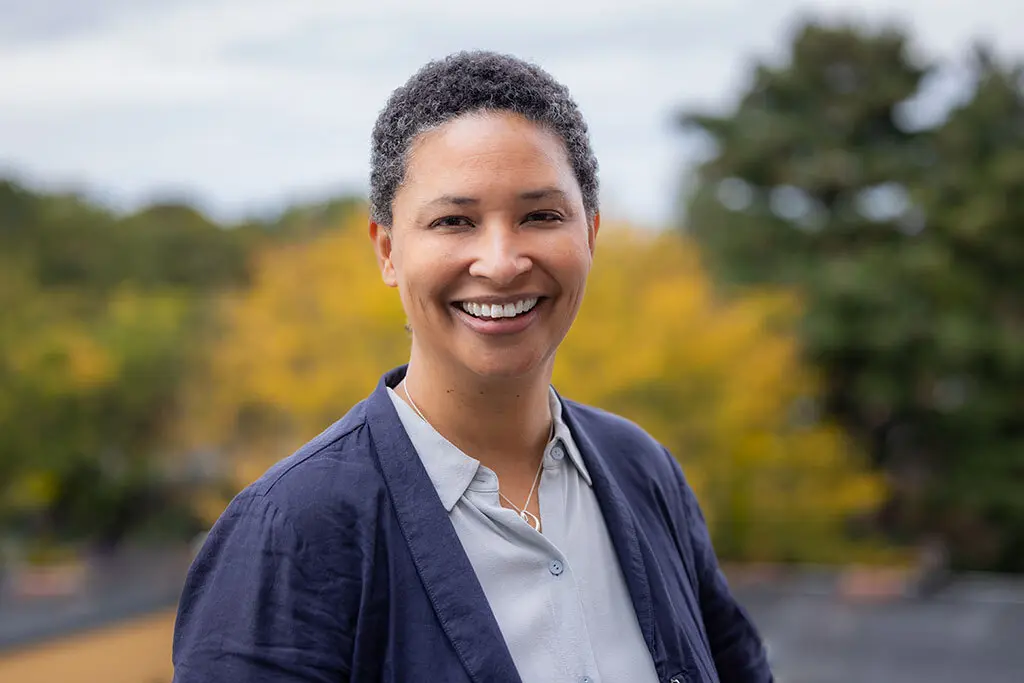
Dr. Danielle Allen on “Radical Duke”
Non-Members $15 | Members $10

The Tombstone Legacies Conference will explore Jefferson’s lasting contributions to secure the freedoms of self-government, religion, and education forever enshrined on his memorial.
Of all Thomas Jefferson’s world-historical accomplishments, he wished to be remembered especially for three achievements. He asked these to be inscribed on the granite marker erected over his final resting place at his beloved Monticello:
Here was buried
Thomas Jefferson
Author of the Declaration of American Independence
of the Statute of Virginia for religious freedom
& Father of the University of Virginia.
The Tombstone Legacies Conference, presented by the Robert H. Smith International Center for Jefferson Studies, will explore Jefferson’s lasting contributions to secure the freedoms of self-government, religion, and education forever enshrined on this memorial.
Morning Keynote
Drawing on the unparalleled documentary record assembled by The Papers of Thomas Jefferson and The Papers of Thomas Jefferson: Retirement Series, this keynote explores Jefferson’s enduring legacies through the documents he created, received, and preserved. Examining correspondence, public papers, and private records, the keynote considers how documentary editing has shaped our understanding of Jefferson and his world.
American Independence
The Declaration of Independence has inspired revolutionary thought around the world for centuries since its creation in 1776. Jefferson’s authorship of this document also highlights the paradoxical relationship between slavery and freedom in the founding of the United States. Engage with our panelists as they share insights about the legacies of the Declaration of Independence.
Religious Freedom
Jefferson demonstrated profound interest in religion and religious freedom over the course of his life. His 1779 proposed bill to establish religious freedom in Virginia signaled a commitment to consider the question of separation between Church and State prior to the Virginia legislature’s passage of the Statute for Religious Freedom in 1786. Learn with our panelists as they discuss how Jefferson’s connection to religious freedom still impacts us today both locally and globally.
Education
Jefferson’s dedication to educational ideals is most often recognized through his pivotal role in founding the University of Virginia. However, the United States’ commitment to educational freedom has been a contested battleground since its earliest years. Connect with our panelists as they discuss and deliberate on the nature of American education and civic engagement, past and present.
Registration includes the Storytelling and American Democracy keynote conversation.
Michael Robert Auslin, PhD, is the Payson J. Treat Distinguished Research Fellow at Stanford University’s Hoover Institution and previously was a professor of history at Yale. He is the author of the just-released National Treasure: How the Declaration of Independence Made America (Avid Reader Press/Simon & Schuster), which he completed as a Distinguished Visiting Scholar at the Library of Congress’s John W. Kluge Center. The Royal Historical Society elected him a full fellow in 2018, and he is the American Heritage Partners Fellow at the Society of the Cincinnati’s American Revolution Institute and a senior fellow at the Foreign Policy Research Institute. He serves as a director of the American Ditchley Foundation. Among his honors is being named a Fulbright Scholar, a German Marshall Fund Marshall Memorial Fellow, and a Young Global Leader of the World Economic Forum. The author of four previous books, he writes a Substack, The Patowmack Packet, on Washington and American history, and lives in Virginia.
Emma Humphries, PhD, is the Chief Education Officer for iCivics. Founded in 2009 by Supreme Court Justice Sandra Day O’Connor, iCivics is dedicated to advancing civic learning so young people have the confidence to shape the world around them and believe in our country's future. In her role, Emma leads iCivics’ research agenda, serves as its leading brand ambassador, particularly as a civics, history, and education expert, and ensures all instructional materials are accurate, objective, non-partisan, and contextual by shepherding iCivics' Independent Review Council. Emma has degrees in political science and education. In 2004, she received a James Madison Fellowship in recognition of her potential to be an outstanding educator of the American Constitution, and in 2012, she received her PhD in Curriculum and Instruction from the University of Florida. Emma is regularly quoted in national publications and invited to speak as a trusted expert in teaching civics and history in the United States, especially in our politically fraught climate. She lives with her husband and two daughters in Saint Simons Island, GA, where she hosts a charity wine festival to raise money for community arts and education.
Ronald Angelo Johnson, PhD, is the 2026-2027 Mellon Distinguished Scholar in Residence at the American Antiquarian Society and the Ralph and Bessie Mae Lynn Professor of History at Baylor University. His latest book is Entangled Alliances: Racialized Freedom and Atlantic Diplomacy During the American Revolution (Cornell University Press, 2025). Entangled Alliances has received the Texas Institute of Letters Honor Award for Most Significant Scholarly Book and the Phillis Wheatley Book Award. Johnson is currently working on the book We Are All Equal: Turmoil and Triumph in the Early United States and Revolutionary Haiti (under contract with Princeton University Press), a diplomatic history of race and revolution, illustrating that Americans and Haitians shared important understandings of liberty. His first book was Diplomacy in Black and White: John Adams, Toussaint Louverture, and Their Atlantic World Alliance, and he is the co-editor of the book In Search of Liberty: African American Internationalism in the Nineteenth-Century Atlantic World. Johnson serves as Steward of the Ella Wall Prichard Fund for Early Black Baptist History at Baylor University.
Catherine E. Kelly is the Executive Director of the Omohundro Institute for Early American History and Culture and Professor of History of William & Mary. A prize-winning historian, her interests focus broadly on gender, culture, and politics in the Early American Republic. She is the author most recently of Republic of Taste: Art, Politics and Everyday Life in Early America (2016). She has also served as the Editor of Books at the OI, the Editor of the Journal of the Early Republic, and the Editor of Common-place.
J. Jefferson Looney is the Daniel P. Jordan Editor of The Papers of Thomas Jefferson at Monticello. He has nearly completed a quarter century as the founding editor-in-chief of the Jefferson Papers Retirement Series, sponsored by the Thomas Jefferson Foundation, Inc., Charlottesville, Virginia. Dr. Looney was formerly editor and project director of the Dictionary of Virginia Biography, and he is a past president of the Association for Documentary Editing. He is the author or editor of several works on the history of Princeton University, where he did his doctoral work in British history.
James P. McClure joined the Papers of Thomas Jefferson at Princeton University as an associate editor in 1996 and became general editor and project director in 2014. He was on the staff of the Salmon P. Chase Papers from 1984 to 1996, having begun his career as a National Historical Publications and Records Commission fellow in documentary editing at the Daniel Chester French Papers. He is a former president of the Association for Documentary Editing. Originally from Texas, he earned a B.A. degree with a double major in history and political science from Utah State University, an M.A. in history with training in historical archaeology from the College of William & Mary, and a PhD in history from the University of Michigan at Ann Arbor, where his dissertation research centered on the political culture of the upper Ohio Valley region from the 1760s to the 1790s. In addition to overseeing the editing of the Princeton edition’s volumes, he has initiated special digital projects including the Jefferson Weather and Climate Records website and, in 2026, an interactive digital exhibit on the drafting of the Declaration of Independence.
Andrew O’Shaughnessy, PhD, is Professor of History at the University of Virginia. Between 2003 and 2022, he served as Vice President of The Thomas Jefferson Foundation (Monticello), and the Saunders Director of the Robert H. Smith International Center for Jefferson Studies. His book The Men Who Lost America. British Leadership, the American Revolution and the Fate of the Empire (New Haven: Yale University Press, 2013) received eight national awards including the New York Historical Society American History Book Prize, the George Washington Book Prize, The National Society Daughters of the American Revolution Excellence in American History Book Award and The Society of Military History Book Prize. He is also the author of An Empire Divided: The American Revolution and the British Caribbean (Philadelphia: University of Pennsylvania Press, 2000). His most recent book books are The Illimitable Freedom of the Human Mind: Thomas Jefferson’s Idea of a University (Charlottesville: University of Virginia Press, 2021) and, co-authored with Trevor Burnard, Republic and Empire: Crisis, Revolution, and America’s Early Independence to (New Haven: Yale University Press 2025). He is an editor of the Jeffersonian America series published by the University of Virginia Press. He coedited Old World, New World: America and Europe in the Age of Jefferson (Charlottesville: University of Virginia Press, 2010) and The Founding of Thomas Jefferson’s University of Virginia (Charlottesville: University of Virginia Press: 2019), and The European Friends of the American Revolution (Charlottesville: University of Virginia Press, 2023).
Melissa Rogers, JD, is the Distinguished Scholar in Residence in Faith, Law, and Public Policy at Wake Forest University School of Divinity. She also serves as a Nonresident Senior Fellow in the Governance Studies Program of the Brookings Institution. Rogers is a nationally known expert on religion in American public life. Her areas of expertise include the U.S. Constitution’s religious liberty guarantees, religion’s intersection with law and public policy, and partnerships between government and faith-based organizations. Rogers formerly served as Special Assistant to the President and Executive Director of the White House Office of Faith-Based and Neighborhood Partnerships for President Barack Obama (2013-2017) and President Joe Biden (2021-2025). She also previously served as Chair of President Obama’s inaugural Advisory Council on Faith-Based and Neighborhood Partnerships, Executive Director of the Pew Forum on Religion and Public Life, and General Counsel of the Baptist Joint Committee for Public Affairs. Rogers is author of Faith in American Public Life (Baylor University Press 2019) and co-author of Religious Freedom and the Supreme Court (Baylor University Press 2008). She holds a J.D. from University of Pennsylvania Law School and a B.A. from Baylor University. She received an Honorary Doctorate of Divinity from both Wake Forest University and the John Leland Center for Theological Studies. National Journal has recognized Rogers as one of the church-state experts “politicians will call on when they get serious about addressing an important public policy issue.”
Eric Slauter, PhD, is Deputy Dean of Arts and Humanities and the College at the University of Chicago and the founding director of the Karla Scherer Center for the Study of American Culture. Slauter earned a PhD at Stanford University, has held research fellowships at the McNeil Center and the Library Company, served as visiting editor at the William and Mary Quarterly, is an elected member of the American Antiquarian Society and the Massachusetts Historical Society, chaired the faculty board of the University of Chicago Press, and leads a course on the environmental history of the book for the Rare Book School. He is the author of The State as a Work of Art: The Cultural Origins of the Constitution, articles on the “trade gap” between history and literature in Atlantic studies, a short biography of the enslaved eighteenth-century painter Scipio Moorhead, and essays on the language of rights and equality in early America. He helped craft the Annotated Declaration of Independence and recorded twelve lectures on the Declaration’s origins, meanings, and afterlives for the Gilder Lehrman Institute of American History’s MA Program through Gettysburg College, contributed to the National Constitution Center’s Interactive Declaration, curated the exhibition “FREE and INDEPENDENT: The Declaration of Independence and the Words that Made the United States” currently on view at the Newberry Library and has a forthcoming book entitled The Promises of the Declaration of Independence: How a Secessionist Manifesto Became a Charter of Liberty, Equality, and Rights.
Emily Sneff, PhD, is an early American historian and leading expert on the Declaration of Independence. She earned her Ph.D. in History from William & Mary. She is a consulting curator for exhibitions marking the 250th anniversary of the Declaration at the Museum of the American Revolution and Historic Trappe. Her book, When the Declaration of Independence Was News (Oxford University Press, 2026) explores the dissemination of the Declaration around the Atlantic in 1776.
Alexis Wells-Oghoghomeh, PhD, is an Associate Professor and Nina C. Crocker Faculty Scholar in the Religious Studies department at Stanford University, where she is also an affiliate of the department of African and African American Studies and Program in Feminist, Gender, and Sexuality Studies. She is the author of The Souls of Womenfolk: The Religious Cultures of Enslaved Women in the Lower South, which won the prize for the Best First Book in the History of Religions from the American Academy of Religion, as well as the Outstanding First Book Prize and Rosalyn Terborg-Penn Book Prize from the Association for the Study of the Worldwide African Diaspora (ASWAD). She is currently at work on her second monograph tentatively titled American Fetish: Witchcraft and the Invention of Black Women in the Era of Slavery, an edited collection on African-American religious history (co-edited with Vaughn Booker, Ahmad Greene-Hayes, and Judith Weisenfeld), and a 2-volume anthology of primary documents related to religion and slavery (co-edited with Jordan Watkins).
Corey D. B. Walker, PhD, is an acclaimed scholar, academic leader, and public intellectual whose work charts new paths of inquiry across disciplines, embodying a rare combination of philosophical insight, theological reflection, and cultural critique. He serves as Dean of Wake Forest University School of Divinity, Wake Forest Professor of the Humanities, and Inaugural Director of the Program in African American Studies. He also leads a major Andrew W. Mellon Foundation initiative on environmental and epistemic justice and was named the 2023–2024 Phi Beta Kappa Frank M. Updike Memorial Scholar, becoming the first Wake Forest professor selected as a Phi Beta Kappa Visiting Scholar. Williams College has named Dean Walker the Sterling A. Brown ’22 Distinguished Visiting Professor of Africana Studies for the spring of 2026.
Ted Widmer is an historian and former presidential adviser who writes widely on history, politics and their intersection. He is Distinguished Lecturer at the Macaulay Honors College of the City University of New York. From 1997 to 2001, he was a foreign policy speechwriter and senior adviser to President Bill Clinton, and he collaborated with the former president on his memoir, My Life. He also served as a senior adviser to Secretary of State Hillary Clinton in 2012-2014. He has been particularly active in the realm of public history. From 2010 to 2015, he helped to create an ambitious series about the Civil War (“Disunion”) in the New York Times, and became one of its lead contributors. In 2019, he conceived and edited a year-long series in the New York Times about the global transformations of the year 1919 ("The Year of the Crack-Up"). In 2020, his book, Lincoln on the Verge: Thirteen Days to Washington was published by Simon and Schuster. It received the prize for the best book of the year from the Lincoln Forum, and the inaugural prize for best book from the Society of Presidential Descendants, among other awards. A new introduction has been written by former Rep. Liz Cheney, explaining how the book helped to shape her thinking in the chaos of the 2020-2021 presidential transition. He has also written or edited six other books, including a two-volume series in the Library of America, American Speeches. In 2022, he was awarded a Guggenheim Fellowship for his next project, a study of racial tension in Boston in 1968.
Auriana Woods is a historian of 19th century African American life and the Director of Getting Word, the African American history department at Monticello (the plantation home of Thomas Jefferson). While her work spans Black American history from slavery to freedom, her focus is on fugitive kinship practices, family separation, and the forced migration of enslaved people from the Upper South to the Lower South and westward between 1800-1865.
As a public-facing historian, Auriana works to reconstruct our collective understanding of American history and identity through filling historic silences, interrogating the consequences of a popular narrative that omits chattel slavery as a founding institution, and emphasizing the centrality of Black Americans in the founding era. She is particularly intent on “re-membering” the histories of individuals who have been invisibilized by the violence of traditional archives, and engages in a historical practice that “challenges the known and the unknowable.” Auriana is a graduate of Columbia University’s Oral History M.A. Program (2022 cohort) and Brown University (class of 2019), where she concentrated in Africana Studies.