

Tour
From Slavery to Freedom
This guided, small-group tour focuses on Monticello's enslaved community and discusses the enduring legacies of slavery and freedom.

During Thomas Jefferson's lifetime, Monticello was a 5,000-acre plantation where more than 400 enslaved men, women, and children lived and labored. Through decades of research, archaeology, and preservation, Monticello has become one of the most thoroughly documented plantations in the world.
Today, Monticello provides a powerful lens for understanding the realities of slavery and layered stories of our shared past.
This guided, small-group tour focuses on Monticello's enslaved community and discusses the enduring legacies of slavery and freedom.
These one-hour, guided outdoor walking tours focus on the experiences of the enslaved people who lived and labored on the Monticello plantation. Start on the hour, available throughout the day.
Enhance your day at Monticello by using the free Bloomberg Connects app, with foreign language self-guided tour options available, or try out a family-friendly scavenger hunt.
The site of several graves of enslaved African Americans at Monticello is a place to honor and reflect on the over 400 enslaved people who lived and labored at Monticello during Jefferson's lifetime.
Monticello's main plantation street features reconstructed cabins and workshops — including the Textile Workshop, Storehouse for Iron, and Hemmings Cabin — telling the stories of the enslaved community who lived and worked here.
Each year, hundreds of thousands of people visit Thomas Jefferson's grave in the Monticello graveyard, which is marked by an obelisk based on his own design.
Monticello's first kitchen
A bronze relief model of Jefferson's entire 5,000-acre Monticello plantation.
Enslaved chef Peter Hemings lived in this quarter for some time before another enslaved chef, Edith Fossett and her family, moved in.
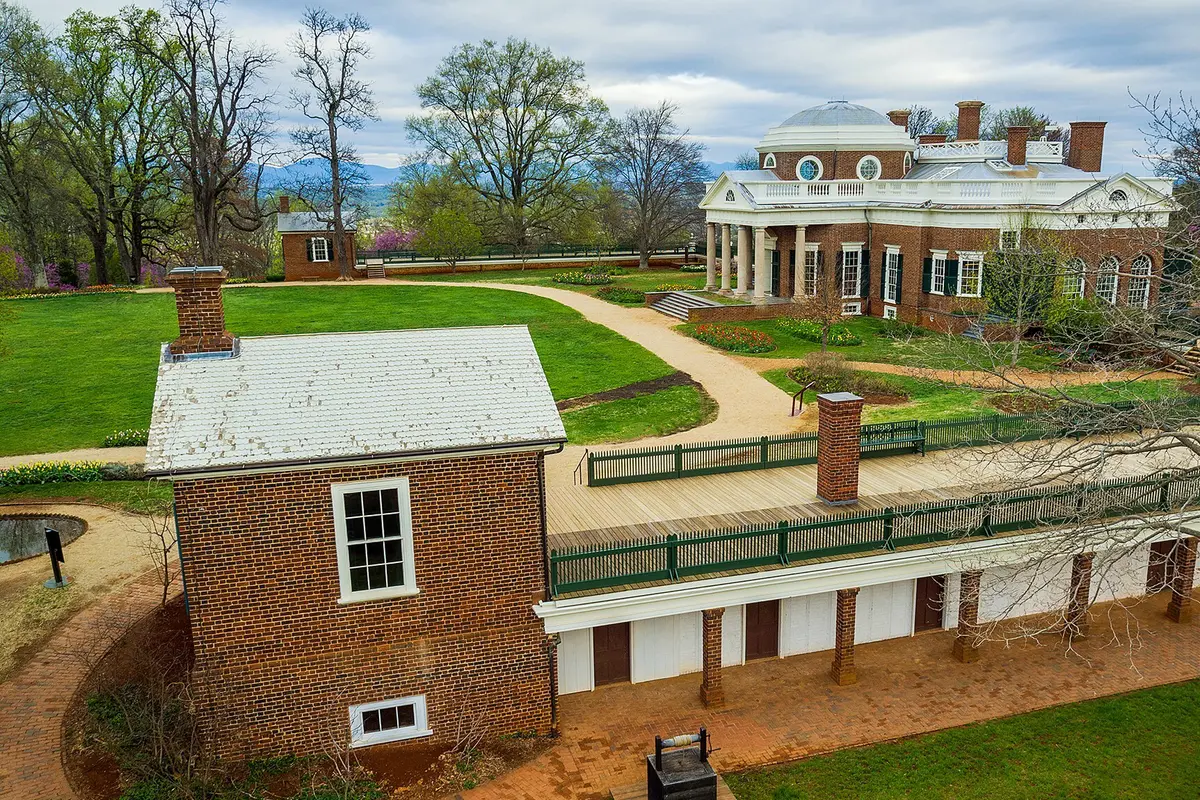
Monticello’s later kitchen incorporated all the newest and best cooking technologies available at the time.
Step into Monticello's working basement, where the Crossroads exhibit, Wine Cellar, and Beer Cellar illuminate the labor, lives, and daily rhythms of the enslaved people who kept the household running.
A powerful, yet tranquil space to reflect upon lives and legacies of Monticello's enslaved African Americans.


