
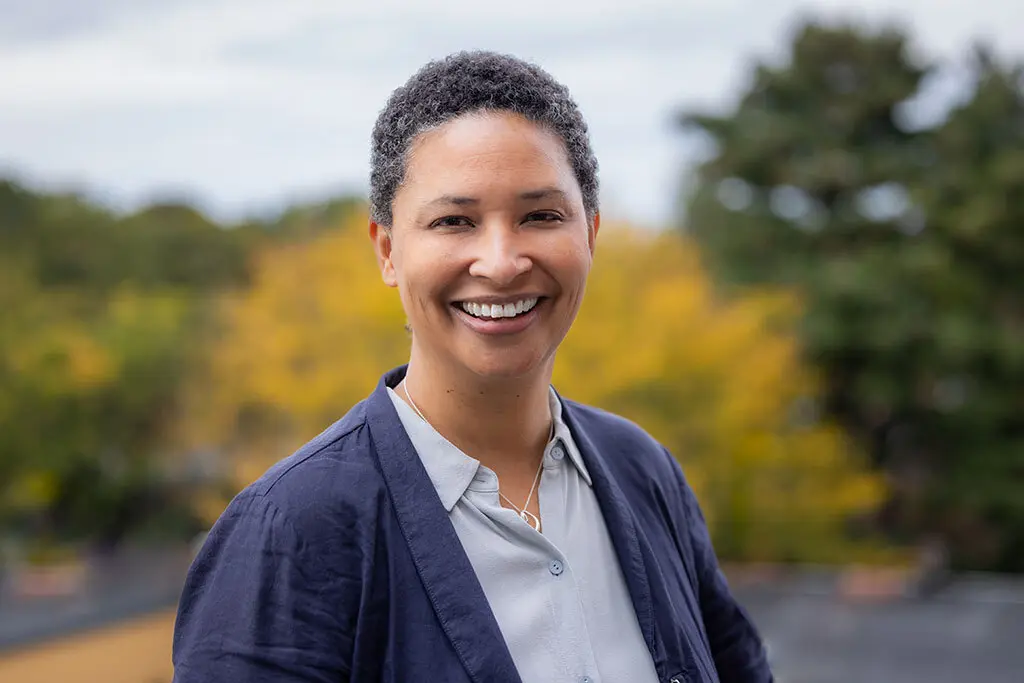
Dr. Danielle Allen on “Radical Duke”
Non-Members $15 | Members $10

In November 2026, 50 professionals from community learning partner organizations in 29 states and the District of Columbia, including public history, museums, higher ed, and K12 support, will gather at Monticello to launch year-long projects integrating civic inquiry into a project at their institution. They will be supported by the Educating for American Democracy Community Learning Partners task force and leaders from the education, democracy, museum, and public history fields.
Adams Presidential Center
Sadie Troy | Director of Education | Quincy, MA
Task Force
Andrew Carnegie Foundation
Constanza Lafuente | Program Analyst, Education | New York, NY
Speaker, Observer
Connecticut Museum of Culture and History
Peter Moran | Project Director, Civics Education through Museum Enrichment | West Hartford, CT
Civics Education through Museum Enrichment
Civics Education through Museum Enrichment (CEME) is a multi-year project funded in whole by a U.S. Department of Education grant, reducing barriers to museum programming that engages students with civic knowledge, skills, and dispositions. K-12 students across Connecticut can take part in free or discounted field trips and outreach programs that are curriculum-aligned and age appropriate. 12 independent museums and learning organizations are collaborating to offer over 60+ programs that make civics come alive for students of all ages.
Democratic Knowledge Project, Harvard Graduate School of Education
Tina Blythe | Director of Professional Learning | Cambridge, MA
Observer
Historic Hudson Valley
Nicole Wallace | Director of Education | Tarrytown, NY
Youth Voices, Historic Places: Co-Creating a New Field Trip Experience
Historic Hudson Valley will organize a youth advisory group to aid in the development of a new field trip program at one of its historic sites, Van Cortlandt Manor. Through this project, young people will serve as community historians, civic leaders, and program designers, working alongside educators, historians, and site staff to create engaging learning experiences that connect local history to contemporary civic participation. Students will meet quarterly with HHV’s education team, learn about the historical relevance of the site (which has been closed for renovation since 2019), and participate in activities to inform the development of the new school program, which will be piloted in late fall 2027 or early 2028.
Historic Richmond Town
Gabriella Leone | Curator | Staten Island, NY
Founding Principles: The Declaration of Independence, Civics, and Staten Island
In June 2026, Historic Richmond Town opened "Founding Principles: The Declaration of Independence, Civics, and Staten Island," an exhibition using examples from local political history to teach foundational civics concepts such as the separation of powers, federalism, and community activism. I see the exhibition as an anchor for civics discourse and community engagement. I am hoping to learn with my colleagues in the Cultivating Civic Imaginations cohort how to plan and sustainably develop programming and even the exhibition so that civics remains a consistent and lasting part of Historic Richmond Town's offerings to the community.
Intrepid Museum
Gerrie Hall | Assistant Vice President, Education | New York, NY
Task Force
Lynda Kennedy | Vice President, Education and Evaluation | New York, NY
Task Force
King Manor Museum
Veronica Alt | Education and Program Manager | Queens, NY
From Slavery to Suffrage: Free Black Communities in 19th Century New York
Students will explore founding father Rufus King’s antislavery advocacy, New York State’s manumission laws, and key Black activists of the 19th century working toward equality. Using our historic site, touch objects, documents, King’s antislavery work, and new research into the free Black community of Douglaston in Jamaica Village, students will be challenged to discuss the social and political landscape of the early American Republic and make connections to modern-day civics.
Museum of the City of New York
Sarah Farmer | Manager, Professional Learning | New York, NY
Civics in the City
The Civics in the City initiative from the Museum of the City of New York (MCNY) aims to support civic education by empowering students and educators to make connections between historical activism and contemporary civic engagement. This innovative project will result in a series of Educator Resource Guides: curriculum-aligned online resources that invite students to explore civic themes through objects from the Museum's collections and exhibitions.
New York Public Library
Kaitlin Holt | Director, Center for Educators and Schools | New York, NY
Task Force
The Rotch-Jones-Duff House & Garden Museum
Lauren Pothier | Community Engagement Coordinator | New Bedford, MA
Civic Engagement with Local History
Through research and thoughtful cultivation, I will be creating a high school focused field trip option that takes the 150 years of history that our historic house museum stewards and contextualizes it in a relevant and modern lens. This will require creating a new interpretation for our museum that keeps the local civics curriculum in mind and blending it with our standard house tour, resulting in a relevant and actionable experience for students. They won't just use our house as an example of local history, but it becomes a place of continuous learning and a space that they see themselves in.
Sing Sing Prison Museum
Emily Keating | Project Director for Youth Education | Ossining, NY
Youth Learning Initiative
A new program for high school and college-age youth explores the history of Sing Sing Prison and the broader story of mass incarceration in America. The inquiry-based experience uses the humanities, oral histories, primary sources, and the physical presence of a working maximum-security prison to help young people question dominant narratives, engage with the lived experience of justice-impacted individuals, and develop their own evidence-based perspectives on justice, punishment, and reform. A democracy must teach its young people to question its most consequential institutions and empower them to make change. A pilot program will run in the 26-27 school year, with the full program launching in fall 2027.
American Alliance of Museums
Elizabeth Merritt | Vice President, Strategic Foresight, and Founding Director, Center for the Future of Museums | Arlington, VA
Observer
American Association for State and Local History
Madeleine Rosenberg | Director of Research and Strategic Initiatives | Princeton, NJ
Task Force
Chrysler Museum of Art
Drew Lusher | Public Programs and Community Partnerships Manager | Norfolk, VA
Art + Democracy Dialogue Deck
The Art + Democracy Dialogue Deck features artwork from the Chrysler Museum’s collection paired with democracy-focused reflection prompts. Centering visual art as an accessible, engaging entry point, the card deck is designed to spark inquiry into the mindsets, practices, and material products of our shared social life. The resource will be available beyond the museum — decks will be distributed to local classrooms and “third places,” such as libraries, cafes, breweries, and community centers. This project aims to inspire individual reflection, foster shared dialogue, and cultivate civic imagination about our collective democratic experience.
Colonial Williamsburg Foundation
Lindsey Horner | Manager of Educator Outreach & Engagement | Williamsburg, VA
Reimagining Colonial Williamsburg’s Teacher Institute Through a Civics-Centered Lens
This project will strengthen the civic learning components of Colonial Williamsburg’s Teacher Institute by more intentionally integrating the Educating for American Democracy Roadmap into place-based, inquiry-driven professional learning. Beginning with the Institute’s Civics Week, the project will develop a clearer framework for connecting historical people, places, and primary sources to enduring civic questions. It will also explore ways to extend learning beyond the summer experience, supporting Teacher Institute alumni as they develop and share civic learning projects in their classrooms.
Heather Nice | The Theresa A. and Lawrence C. Salameno Executive Director of Strategic Education Projects & Partnerships | Williamsburg, VA
Task Force
Democracy in Dialogue Virtual Exchange Program, Smithsonian Institution
Ali McKersie | Lead Education Specialist, Professional Learning | Washington, DC
Innovation in Real Time: Testing and Refining a Journey of Civic Imagination
This project launches and tests "Innovation: A Journey of Civic Imagination," the new theme for the Smithsonian's Democracy in Dialogue Virtual Exchange Program, debuting in January 2027, and pushes it toward harder questions. Whose ingenuity gets remembered, credited, and collected? How is democracy itself an ongoing invention? What should our communities invent next? Teachers and students across rural, suburban, and urban sites will uncover hidden histories of innovation, imagine local civic ideas to enact, and help refine the program’s guiding question, toolkit, and final projects in real time. In so doing, they will explore and share insight into how civic imagination can be seen, strengthened, and shared, asking: What would it look like to create a national archive of community ingenuity?
Education Rights Institute, UVA Law
Dr. Sarah Beach | Director of Research | Roanoke, VA
Quick Guides on Civic Learning
Bi-partisan interest in increasing civic knowledge and engagement opens a window to contribute to the improvement of civic learning outcomes for the next generation. This project will translate findings from research across several domains of civic learning into action-oriented quick guides. These guides will be published by the Education Rights Institute and can be used by educators and community partners who are interested in preparing youth for engaged civic participation across local, state, and national levels of government.
Ford's Theatre
Tricia Patrick | Irani Foundation Director of Education | Washington, DC
Advancing the Unfinished Work
As a participant in Cultivating Civic Imagination, Ford’s Theatre seeks to explore how arts-based practices, historical inquiry and interpersonal communication can encourage participation and demystify civic participation as well as strengthen civic agency. Our goals are to identify effective facilitation methods, dialogic tools and participatory activities that foster meaningful engagement across differences; explore approaches for youth-focused and multigenerational audiences; and develop resources or formats that extend learning beyond a single convening and encourage continued civic participation.
George Washington's Mount Vernon
Zerah Jakub | Senior Manager of Education Operations | Mount Vernon, VA
Task Force
Lancaster History
Mabel Rosenheck, PhD | Director of Education and Exhibitions | Lancaster, PA
What Does Freedom Mean To You?
The Thaddeus Stevens & Lydia Hamilton Smith Center for History and Democracy is LancasterHistory’s newest museum. Through the lives of Thaddeus Stevens and Lydia Smith, the Center uses the history of the abolitionist movement, Reconstruction, and the Civil Rights Movement to inspire visitors to advance freedom, equality, and democracy today. “What Does Freedom Mean To You?” is an educational program in which students explore how understanding the past can help them understand themselves and how understanding history can help them understand the present and imagine the future. This year, we will be developing the program’s gallery experience and adapting it for students of various ages and backgrounds.
Liberty Hall Museum
Hannah M. Gaston | Director of Education | Union, NJ
Constitution vs Courthouse: Civics in Action on a Multi-Site Single-Day Field Trip
Liberty Hall Museum proposes a joint field trip program inviting high schoolers to Liberty Hall Museum and the Union County Courthouse to 1) discover the roots of American democracy at the home of a Constitution signer and 2) explore how those ideals have been upheld or abandoned in our present government. According to census data, 71% of Union County’s population identifies as non-white. This program aims to effectively examine issues of systemic racism in the justice system, help students identify themselves as civic participants, and cement the idea that everyone has a roll to play in their government and community.
Library of Congress
Eileen J. Manchester | Program Specialist/Manager of the Lewis-Houghton Civics & Democracy Initiative | Washington, DC
Sparking Civic Imaginations with Music and Arts-related Primary Sources
The Library of Congress Lewis-Houghton Civics and Democracy Initiative was established in 2023 under the umbrella of the Teaching with Primary Sources (TPS) Program. LHI grants support the development of educational projects in which analysis of the Library’s music and/or creative arts-related digitized primary sources is central to teaching and learning about history, civics, and/or democracy. For her “Cultivating Civic Imaginations Summit” project, Eileen Manchester will lay the groundwork for a community of practice within the TPS Educational Consortium to refine approaches for integrating analysis of music and arts-related primary sources, arts-driven instruction, and civics learning.
Maryland Center for History and Culture
Tyler Osborne | Digital Learning Manager | Baltimore, MD
Our Maryland
Our Maryland is a collaboration with educators and students from across the state to curate a selection of 24 objects to represent every Maryland county. After a guided investigation of historical documents and objects with a museum educator, students will determine how museums use these primary sources to tell stories. Students will then work together within their class to identify an object to represent themselves as a collective. This project intends to encourage students to consider their connections to the past, their communities at present, and the future.
Maryland Civic Education Coalition
Genie Massey, Ed.D. | Director of Communications & Strategic Initiatives | Boonsboro, MD
Empowering Community Partners to Advance Youth Civic Excellence
Maryland’s new Seal of Civic Excellence creates an opportunity to connect student civic learning with meaningful participation beyond the classroom. This project will empower civic organizations, community institutions, and municipal, county, and state government partners to support schools and students pursuing civic learning experiences. Drawing on the EAD Roadmap and Maryland’s emerging Seal framework, it will translate effective civic-learning pedagogy into practical tools that help community partners create inquiry-based experiences that strengthen youth civic knowledge, agency, participation, and belonging.
Morven Museum & Garden
Greer Luce | Curator of Education & Public Programs | Princeton, NJ
Making Change at Morven School Programs
Throughout its history, the people connected to Morven made changes, small and large, that impacted their community whether locally in Princeton, statewide in New Jersey, or on a national scale. Why do people, like those we explore at Morven, seek to change things in their community and how do they go about it? Why do some try to stop change from happening? Using Morven as a lens, this project is a series of pilot school programs for grades 3–5 examining how individuals in a democracy, through actions such as voting, activism, and service, make change.
National Council for the Social Studies (NCSS)
Kelly McFarland Stratman | Executive Director | Arlington, VA
Cultivating Civic Possibility
Social studies is essential in preparing students for the responsibilities of citizenship, and yet it has been marginalized for years. The result is uneven civic participation; individuals do not see themselves in government and institutions. To affect change, it is critical the civics education community has some shared language around what is needed for our democracy, what resources exist, and how the community can work together to ensure our democracy’s success. As a first step, Cultivating Civic Possibility will explore how NCSS’s College, Career, and Civic Life (C3) Framework and the EAD Roadmap interact and advance civic engagement.
National Museum of American History
Carrie Kotcho | Assistant Director, Education and Experience | Washington, DC
Task Force
New American History, University of Richmond
Annie Evans | Director of Education and Outreach | Richmond, VA
Remembering the Revolution / States of Independence
How has America remembered and reimagined its origin story over 250 years? New American History, based at the University of Richmond, will workshop two innovative digital resources designed for secondary/post-secondary instructors: Remembering the Revolution and States of Independence. Developed in collaboration with Thomas Jefferson’s Monticello, museum educators and historians will be invited to help us imagine effective outreach and engagement strategies. This collaboration will shape how we share these dynamic collections to maximize their impact for classrooms across the United States.
President Lincoln's Cottage
Joan Cummins | Associate Director of Learning Initiatives | Washington, DC
My City My Power
This program engages middle school students across Washington, DC in exploring America's 250th with creativity, compassion, and civic engagement. Via this partnership between President Lincoln’s Cottage, LearnServe, and classroom teachers, participating students will create art pieces inspired by their personal and community history and develop civic action projects on issues that concern them. Each semester will culminate in a public exhibition celebrating students’ vision for the future. We believe in an America that reflects our common humanity, cultivates belonging, and honors the complexity in our nation’s history. My City, My Power is part of a meaningful and compassionate observation of the Semiquincentennial.
Smithsonian National Portrait Gallery
Jocelyn Kho | Student Programs Coordinator | Washington, DC
Feast of Reason through Portraiture: National Portrait Gallery- School Partnership Project
This museum-school partnership project deepens civic awareness through portraiture. The multi-visit partnership would include lessons/ visits that scaffold upon each other. Students first master close-looking strategies by analyzing portraits from the museum’s collection then transition to discussions about elements of a democratic society. The program culminates in an interactive "feast of reason" where students, over a meal, role-play distinguished and formidable individuals throughout the nation’s history and debate vital civic questions. By using portraiture as the premise, students gain historical understanding and a heightened sense of civic responsibility.
Thomas Jefferson's Monticello
Lora Cooper | Strategic Projects Manager | Charlottesville, VA
Staff
Melanie Holland | Administrator of Teacher Learning | Charlottesville, VA
Feast of Reason in the Classroom: Bringing Civic Dialogue to the K12 Classroom
Monticello educators have used the Feast of Reason (FoR) card deck with teachers, students, and public audiences to encourage thoughtful conversation, active listening, and civil disagreement. However, the deck was not originally designed for K–12 classrooms. We propose creating a student-centered version of the deck and a companion teacher toolkit to help educators bring these conversations into their classrooms. Through the Cultivating Civic Imagination professional learning community, we will workshop and refine the resources. Our goal is to produce a physical and digital card deck and a toolkit with discussion guides, classroom activities, and assessment tools.
Sarah Jencks | Civic Partnerships Fellow | Washington, DC
Task Force, Host
Steve Light | Vice President for Education and Guest Experience | Charlottesville, VA
Task Force, Host
Justin Reid | Civic Partnerships Fellow | Farmville, VA
Task Force, Host
Urban Libraries Council
Shamichael Hallman | Senior Director of Civic Health and Economic Opportunity | Washington, DC
Speaker
Trust for the National Mall
Jeremy Goldstein | Vice President of Programs | Washington, DC
Measuring Civic Imagination on the National Mall: From Engagement to Impact
This project will explore how in-person and digital experiences on the National Mall help develop civic understanding and shape how people see their role in America’s story. Building on the Volunteers in Parks program and National Mall Gateway, the work will move beyond participation to define meaningful outcomes and test practical assessment methods. The goal is to develop a framework to collect useful data for understanding how public lands and digital learning can foster civic imagination, strengthen connections to shared national narratives, and offer insights that can benefit partners beyond the National Mall.
Veterans in Society Initiative at Virginia Tech
Jim Dubinsky | Associate Professor, Co-Founder of Veterans in Society Initiative | Roanoke, VA
The Oath and the Ballot: Voting Rights for Veterans and Their Families
Veterans swear an oath to defend the Constitution, but they are rarely invited to wrestle with the questions that promise raises. This civic learning experience brings veterans and their families together to explore the history and ongoing significance of voting rights. Drawing on Carol Anderson's One Person, No Vote and Shirley Chisholm's "Seat at the Table" resources, participants trace landmark Supreme Court decisions from Williams v. Mississippi forward, then take that inquiry into their own communities. In the Roanoke region, where a diverse city meets rural Appalachian towns amid deep political divides, these conversations carry urgent stakes.
White House Historical Association
Anna Kutter | Teacher Education Specialist | Washington, DC
The Presidency and the People's House
I will develop a K-12 teacher professional development program with the goal of enabling students and teachers to deepen civic connections with the Executive Branch through the lens of White House history. Through site visits, content sessions, and pedagogical strategies, the program will address several essential questions, including: how has White House history reflected American civic change? When have U.S. presidents (and first ladies) driven or prevented civic progress? How has the spatial relationship between the people and the People’s House changed over time, and how do these changes affect public investment in the workings of the Executive Branch?
Wilkening Consulting
Noël Koehn | Senior Consultant | Richmond, VA
Evaluator
American Association for State and Local History
John Dichtl | CEO | Nashville, TN
Observer
Bill of Rights Institute
Rachel Davison Humphries | Sarasota, FL
Imagining Self-Government: What Civic Education Makes Possible
What kinds of educational experiences help people imagine, shape, and take responsibility for their shared future? A free society depends on more than civic knowledge. It depends on people capable of exercising judgment, working with others, and turning ideas into meaningful action. This project explores how civic education can intentionally cultivate civic imagination, agency, and the habits of self-government. By connecting philosophical inquiry, educational design, and practical approaches to measuring civic growth, we seek to better understand which experiences make a difference, how we recognize their impact, and how these insights can strengthen civic learning across communities and institutions.
The Greensboro History Museum
Catherine Johns | Curator of Education | Greensboro, NC
Democracy Traveling Trunks and Building a Stronger Regional Youth Summit
This project focuses on two educational programs hosted by the Greensboro History Museum. The first is the NC Democracy Traveling Trunks, one of the fifteen traveling trunks in the Traveling Trunk program, NC Democracy Trunk helps North Carolina teachers educate students on the rise and restriction of voting rights. The second is the regional Smithsonian Youth Summit, which brings seventh through twelfth-grade students together to explore history and discover impactful actions they can take within their own communities.
History Co:Lab
Tess Benoit | Director of Programming | Winston-Salem, NC
Task Force
Historic Locust Grove
Evelyn Woock | Education Specialist | Louisville, KY
LouiVirtue
LouiVirtue explores an idea as old as the nation: democracy depends on the character of its citizens. Rooted in E Pluribus Unum, "out of many, one," it examines the civic virtues a healthy democracy requires: civility, respect, responsibility, humility, deference, and commitment to the common good, which are easy to name but hard to practice. Through history, reflection, time on the land, and mentors across generations, Louisville teens will consider who was granted citizenship, who fought to claim it, and how family, community, technology, and division shape civic life. LouiVirtue asks what citizenship gives, and requires, of each of us.
Historic Oakland Foundation
Jessica VanLanduyt | Vice President, Experiences and Engagement | Atlanta, GA
Oakland Civic Pathways
Oakland Civic Pathways is a youth civic engagement and leadership program that connects Atlanta’s civic history with contemporary community needs. Participants will explore the lives and contributions of civic leaders, educators, advocates, and community builders buried at historic Oakland Cemetery, including individuals who shaped Atlanta’s civic institutions. Through Oakland’s connections to Atlanta city government, youth will learn directly from the city’s civic processes and examine how local government, community advocacy, and civic participation shape the city today. Participants will conduct neighborhood-based research and develop community-based projects and programming in partnership with local organizations.
Levine Museum of the New South
Val Brown | Chief Education and Strategic Partnerships Officer | Charlotte, NC
Task Force
Made By Us
Caroline Klibanoff | Executive Director | Miami, FL
Speaker, Observer
South Carolina State Museum
Ani Simmons | Director of Audience Engagement | Columbia, SC
Roots of Change: Growing Civic Leaders
This initiative expands the Museum’s ongoing youth and foodways programming by engaging 11th–16th grade students through a new Youth Advisory Council, selection beginning in late 2026. Launching at the Penn Center at St Helena’s Island, SC in February 2027, the group will explore South Carolina food systems and cultural heritage. Throughout spring 2027, members will design a youth-led Civic Season/Juneteenth symposium that produces a food-related public policy agenda. After continued work in Summer 2027, the agenda will be shared with state legislators and publicly unveiled at the Harvesting Heritage Crab Crack in August 2027.
Cincinnati Museum Center
Arynn McCandless | Director, Program Development | Cincinnati, OH
Food for Thought: Shared Stories and Civic Belonging
Food for Thought: Shared Stories and Civic Belonging is a project centered on our teaching kitchen, the Cr(eat)e Culinary Studio, as a site for civic dialogue, storytelling, and community reflection. We see tremendous potential to move beyond cooking demonstrations and technical skill-building to be a welcoming environment that bridges foodways with conversation, connection, and shared learning. I am interested in exploring models similar to Monticello’s “Feast of Reason,” where food and shared meals serve as a catalyst for thoughtful discussion and civic engagement and encourage deeper reflection about identity, belonging, and our collective future.
Civic Mission Schools Network
Mary Ellen Daneels | Chief Learning and Innovation Officer | Roscoe, IL
Cultivating Civic Imagination and Courage Through Microcredentials
This project will develop and refine a series of Guardians of Democracy microcredentials that help educators, school teams, and community partners cultivate civic imagination and civic courage. Two interconnected pathways will support Conversations on Life, Liberty, and the Pursuit of Happiness and the continued expansion of the Civic Mission Schools Network. Through inquiry, dialogue, reflection, student voice, and community engagement, participants will explore the ideals, tensions, and evolving story of American democracy, engage with diverse perspectives, imagine possibilities for their communities, and build the knowledge, skills, and courage to translate democratic principles into responsible civic engagement.
Douglas County Historical Society/Watkins Museum of History
Steven J. Nowak | Executive Director | Lawrence, KS
Conversation Starters: Civic Imagination Opportunities at the Watkins Museum
Founded to prevent the westward expansion of slavery, Lawrence, Kansas has a heritage of civic engagement. The Watkins Museum’s permanent exhibitions have the potential to spark civic conversations but may not be engaging visitors’ civic imagination. Museum staff, guided by local historians and community members, will audit the permanent exhibitions, and identify stories with the potential to unlock civic imagination. They will develop techniques to highlight how people have had civic impact in the past and connect examples from the past to issues important in our community today, creating experiences that intentionally inspire civic imagination and encourage civic engagement.
The Henry Ford
Phil Grumm | Associate Director of Learning & Engagement | Dearborn, MI
The Role We Play
Over the next 18 months, this project will explore how history-based learning experiences can help young people see themselves as active contributors to their communities. Through new educational resources connected to the Jackson Home, a field trip experience bringing students from Alabama to Detroit, and supporting exhibition and public programming opportunities centered on stories of hope and resilience, we will develop and test approaches that help learners reflect on a central question: What role can I play in making my community a better place for everyone?
Indiana Humanities
Megan Telligman | Director of Programs | Indianapolis, IN
Indiana Voices: Conversations about Community and Country
The “Indiana Voices” project focuses on designing public programming that engages Indiana residents in reflection and conversation exploring how national and local community identities are formed. These resources will be offered as companion programming to the Smithsonian's Museum on Main Street starter kit exhibition "Many Voices, One Nation," extending its reach to communities not hosting the exhibit. Drawing on the exhibition's framework of "negotiation" (the places where Americans have grappled with freedom, inclusion, and equality in education, the military, work, sports, and religion), the project explores the application of Educating for American Democracy’s framework to the design of scalable, humanities-based program formats relevant to Indiana’s communities and contemporary challenges.
Lincoln Presidential Foundation
Erin Mast | President and CEO | Chicago / Springfield, IL
Task Force
Living History Farms
Ruth Haus | President & CEO | Urbandale, IA
Cultivating a Community of Civic Engagement in Iowa
In 2026, the state of Iowa adopted new curriculum standards that emphasized civics. This curriculum went into effect with the 2026-2027 academic year. The curriculum’s guiding principles state that a high-quality program emphasizes active engagement with democratic principles, student-driven inquiry, evidence-based research, and effective use of primary sources. (Iowa Academic Standards for Social Studies, January 2026, pages 7-8) We plan to use the collective experience of the EAD-CLP to identify new ways of engaging with students and teachers to support civic education, using examples from Iowa’s unique history. This result is a framework that can be used in developing new teacher PD workshops, civics-based programs, and staff training workshops.
National Council for History Education
Jessica Ellison | Executive Director | White Bear Lake, MN
History's Habits of Mind: Amplifying the Heartbeat of NCHE's Work
NCHE seeks to expand our signature History’s Habits of Mind in three ways: integrating the Habits more completely into the central nervous system of the organization; collecting research and data to support the educational relevance of the Habits; and building out the framework to include more supporting materials. I imagine a history education world where the response to History’s Habits of Mind is not “what’s that?” but instead “I use those all the time!”
National WWI Museum and Memorial
Nicole Dobronski | K-12 Education Specialist | Kansas City, MO
Civic Learning Studio
The Civic Learning Studio will be designed to provide learners of all ages with access to a platform for exploring complex questions about democracy in the world today, using primary sources from the Museum and Memorial’s collection and thoughtful essential questions that update with current events. The space will be designed to build connections from the past to the present. The focus will be access for K-12 learners and ease of classroom access, but also engaging anyone to practice thinking through civic action while employing evidence-based reasoning skills.
Ohio History Connection
Morgan McQueen | Statewide Education Program Manager | Columbus, OH
The Site-Based K12 Civics Toolkit
Utilizing the EAD framework, McQueen will develop adaptable programming that brings civics to life for Ohio students and educators at Ohio History Connection sites. Relying upon existing successful programs as a foundation, the resulting programming will intentionally engage K-12 students in civics, while also allowing flexibility to ensure the program serves the unique strengths, needs, and visitors of each historic site. The program will serve as a runway and first step towards civic engagement for students, educators, and families, aligning with future civic engagement events for broader audiences at Ohio History Connection sites.
Ruth Mott Foundation/Applewood
Renee Saba | Manager of Education Programs | Flint, MI
Imagining Both Sides
The Flint Sit-Down Strike (1926-1927) had lasting impact on Flint and the national labor movement. C.S. Mott, one of the founders of General Motors (GM), was influential in national business strategies and played a large role in shaping the Flint community. While C.S. led a rich civic life, through his role at GM, his decisions and actions contributed to the conditions that culminated in the strike. This program will explore the strike through the lens of civic participation and the complex legacy of what it looks like to be on “both sides.
Wisconsin Historical Society
Jessica Schmitz | National History Day Coordinator | Madison, WI
Living Together – Civic Learning Curricular Resources
Working collaboratively with teachers across Wisconsin, these curricular resources will use primary sources from the Wisconsin Historical Society collections to teach historical literacy and civic learning skills for students across Wisconsin and the region. The curricular resources will be grounded in the historical scholarship underpinning a new gallery, Living Together, that will be a cornerstone of the new Wisconsin History Center when it opens in 2028. The resources will include source exploration and discussion guides that look at pivotal moments in state, regional and national history. Each resource encourages understanding of the past, its impact on today, and possibilities for the future.
Bullock Texas State History Museum
Catherine Whited | Head of School Programs | Austin, TX
Civics Summer Camp
I plan to investigate and potentially plan a weeklong summer camp for school-aged children, to launch in August 2028. The activities in this camp will be built around instilling civic imagination and courage in Texas students. As a state history museum, my institution is well-positioned to utilize the lessons of the past to inspire students to better realize the dreams of our future.
Center for American Civics at Arizona State University
Liz Evans | Program Director for Civic Education and Outreach | Tempe, AZ
Imagining America's Next 250 Years: A National Civic Conversation
Imagining America’s Next 250 Years: A National Civic Conversation is a year-long public civic learning initiative combining webinars, podcasts, public dialogue, and a national Civic Reading and Conversation Series. Drawing on history, storytelling, and civic imagination, the project will engage scholars, civic leaders, educators, students, cultural institutions, and the public in exploring enduring questions about citizenship and self-government. Collaboration with Cultivating Civic Imaginations cohort partners will expand the project’s perspectives, partnerships, and national reach.
Texas State Library and Archives Commission
Peggy Price | Education Outreach Coordinator | Austin, TX
Capital Connections: Where Texas Goes to Work
A civics-oriented learning trail built on descriptive milestone markers educating visitors to the Capitol Complex in Austin, Texas where the three branches of government are represented by the Governor’s Mansion, the State Capitol Building, and the Supreme Court. Signage containing information about relevant aspects of Texas history and state government will feature images sourced from the State Archives. The trail may ultimately connect to agencies beyond the city core as well as to an online version. Through connecting the physical locations of government work to its history and purpose, visitors will establish a foundation of knowledge of civics and public service.
Heritage Lakewood Belmar Park
Steve Luebke | Museum Educator | Lakewood, CO
Start Small Civics
This prototype Civics program emphasizes the mechanics of local government, Tailored toward Secondary Students, students are assigned into one of three groups, Executive (Mayor’s Office), Legislative (City Council) and Judicial (County Judges), each with stated limitations, powers and budget. A local concern is presented, such as “Crime spree” or “Wildfire”. Museum staff facilities a role play between each group, seeking to conclude that while working together, each institution plays a role with their respective powers and limitations. A time-frame, and constituent satisfaction score are also provided, which is dependent on participants choices.
University of Colorado
Rebecca Theobald | Associate Research Professor, University of Colorado, Colorado Springs, and Founder and Director, GeoCivics | Colorado Springs, CO
Task Force
Utah Historical Society
Brandi Burns | Director of Education & Engagement | Salt Lake City, UT
Democratizing the Digital Landscape: A Toolkit for Putting Local and Women's History on the Map (And in the AIs)
This project develops a public history toolkit to train community learning professionals and volunteers to systematically incorporate women's and local histories into Wikipedia. Because search engines and Artificial Intelligence models train heavily on Wikipedia, platform representation gaps systematically erase marginalized stories from modern public knowledge. To navigate Wikipedia’s strict Conflict of Interest rules, the toolkit teaches professionals to focus on verified historical figures tied to historic sites rather than promoting their own institutions. Refined through the Cultivating Civic Imagination cohort, this initiative transforms digital editing into active civic literacy before rolling out nationally.
Center for Revitalizing American Institutions, Hoover Institution
Tom Schnaubelt | Executive Director | Palo Alto, CA
Observer
High Desert Museum
Dana Whitelaw | Executive Director | Bend, OR
High Desert Project
The High Desert Project is a conversation and dialogue program. We focus on contemporary themes relevant in the West and nuanced in their complexity. Topics includ water, wolves, horses, wildness, restoration, community growth among many more. The program recruits 12 individuals and holds four immersive-learning events over 4-6 weeks. These shared learning events immerse the participants in the theme using our collection, taking field trips, learning from knowledge holders, scholars, community leaders, ranchers, farmers….the list is long. Conversations and understanding of different perspectives become deeper, more meaningful and we believe that this is a critical component of building community.
Japanese American National Museum
James E. Herr | Director, Daniel K. Inouye Center for the Preservation of Democracy | Los Angeles, CA
Speaker
Punahou School
Pamela Rotner Sakamoto, Ph.D. | Co-Director, Davis Democracy Initiative | Honolulu, HI
Forging a Public Partnership
The Davis Democracy Initiative (DDI) is a major civics program at Punahou School, the largest independent school in the nation on one campus. A DDI pillar is public-private partnerships. We will work with the Honolulu Museum of Art to bring a noteworthy film to the state. We envision sponsoring a film concerning an aspect of democracy to be followed by a conversation between guest speakers, and a program at Punahou that we will invite students from other schools to participate in. We will reach a wide population, ranging from middle or high school students to members of the general public.
University of Portland
Anne Pitsch Santiago | Associate Professor, POL; Dundon Berchtold Faculty Fellow for Constructive Dialogue | Portland, OR
Cultivating a Democratic Habitus: Fostering Norms, Dialogue, and Civic Engagement
Working in partnership with leaders from the Moreau Center for Service and Justice, Diversity and Inclusion Programs, and the Engaged Humanities incubator, this project advances democratic norms, dialogue and community engagement by providing programming, projects, and toolkits where students can engage with big ideas about being "good democratic citizens" as well as with community members to foster a habit of being engaged beyond our campus borders.
The Educating for American Democracy Community Learning Partners (EAD-CLP) Network is a collaborative initiative composed of more than 300 informal educators in museums, libraries, and historic sites across the country that aims to strengthen civic learning and education in the United States.


