Milestones in Research and Interpretation of Slavery at Monticello
The history of the research and interpretation of slavery at Monticello stretches back to the establishment of the Thomas Jefferson Foundation in 1923. Explore a timeline of key milestones in the century since.

1920s
1923:
The Thomas Jefferson Foundation, originally known as the Thomas Jefferson Memorial Foundation, is founded.
1924:
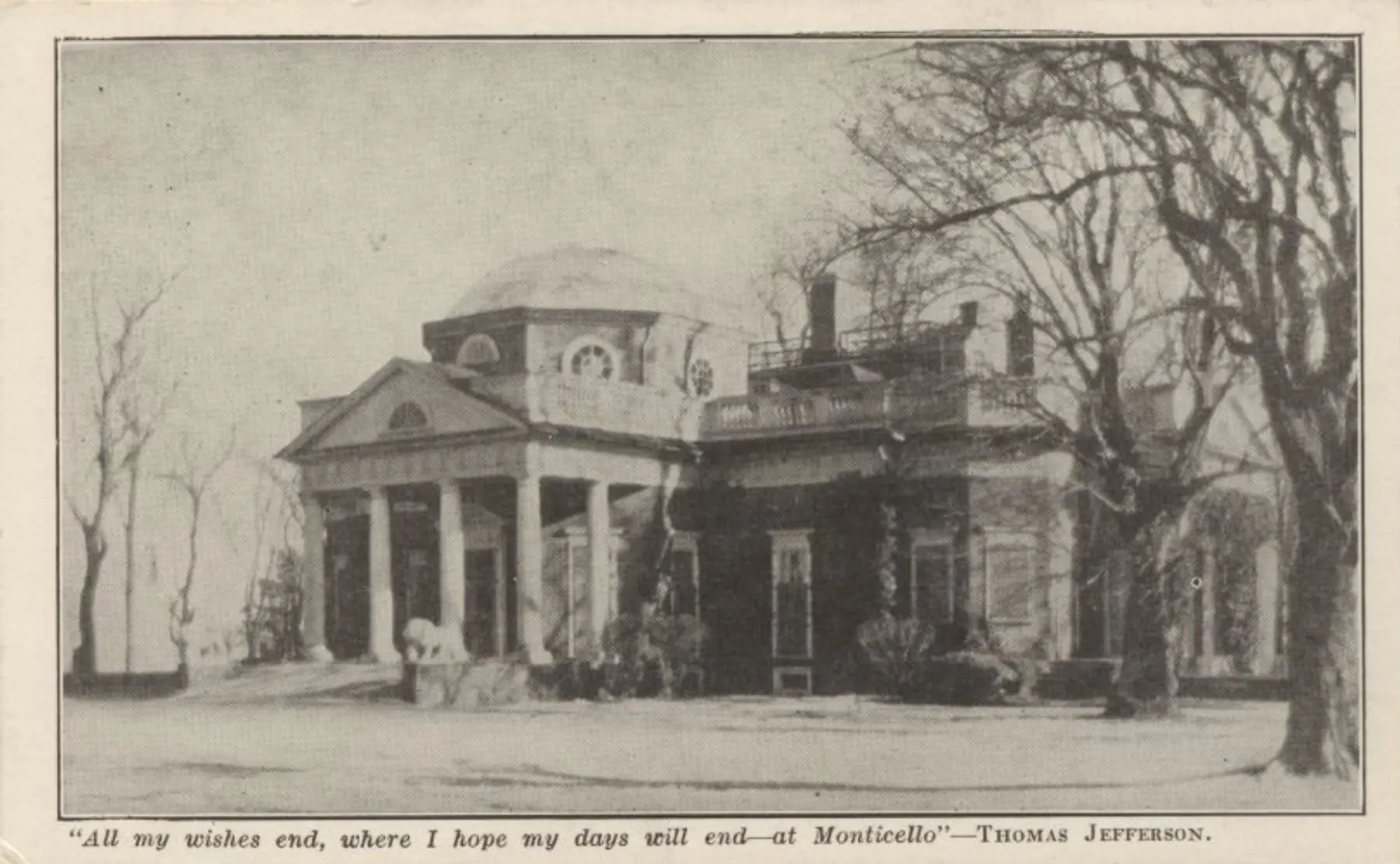
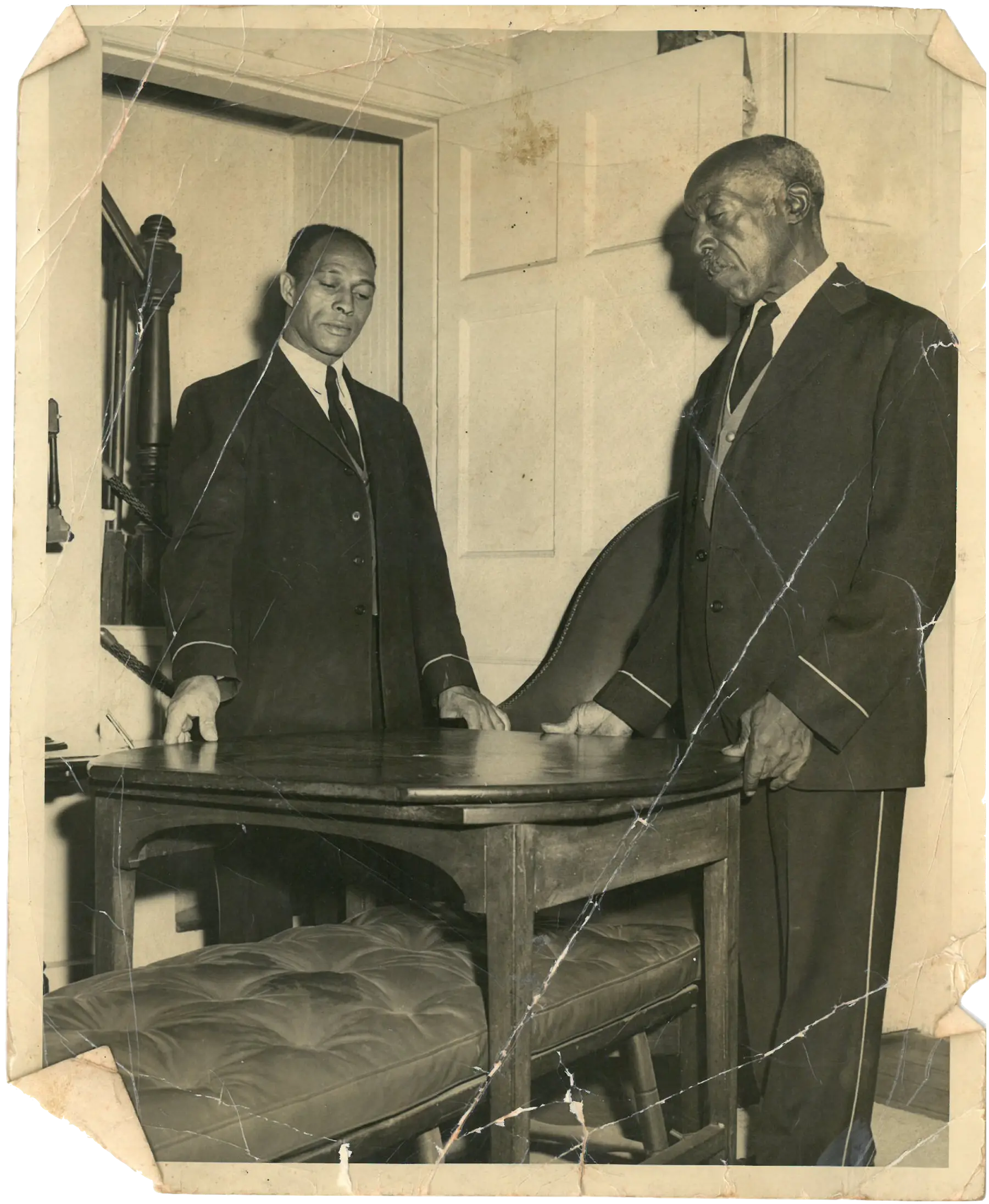
The Foundation began its public interpretation in 1924. Monticello's first guides were African American men, many of whom descended from Monticello's enslaved community during both Jefferson and Levy-era ownership. These guides wore uniforms and gave tours to the public until 1951, when white "hostesses" were hired in their place. Many former guides left the Foundation, while others were relegated to ticket-taking and other less public-facing duties.
1950s
1957:
In 1957, Harvard graduate student Oriel Pi-Sunyer began an archaeological investigation of Mulberry Row using Thomas Jefferson’s 1796 Mutual Assurance Plat (an insurance document detailing all of the storehouses, workshops, and dwellings on Mulberry Row) as a guide to understanding slavery at Monticello.
Pi-Sunyer located the following buried structures: Building c (the Joiner’s Shop), Building d (the Blacksmith’s Shop), Building j (the Nailery), Building l (the Storehouse for Iron), and Building n (the Wash House), which was replaced by a stone house in 1809.

Jefferson's 1796 Mutual Assurance Plat describing Mulberry Row; (c) MHi

Joinery foundation on Mulberry Row before (left) and after (right) Pi-Sunyer excavations, circa 1957; (c) TJF
1960s
1967:
James A. Bear, Jr., Monticello's Curator from 1955 to 1974, edits Jefferson at Monticello: Recollections of a Monticello Slave and a Monticello Overseer (Charlottesville: University of Virginia Press), which contains recollections by Monticello's enslaved blacksmith Isaac Granger Jefferson and Monticello overseer Edmund Bacon. Granger’s memoir was one of four memoirs published by people formerly enslaved at Monticello.
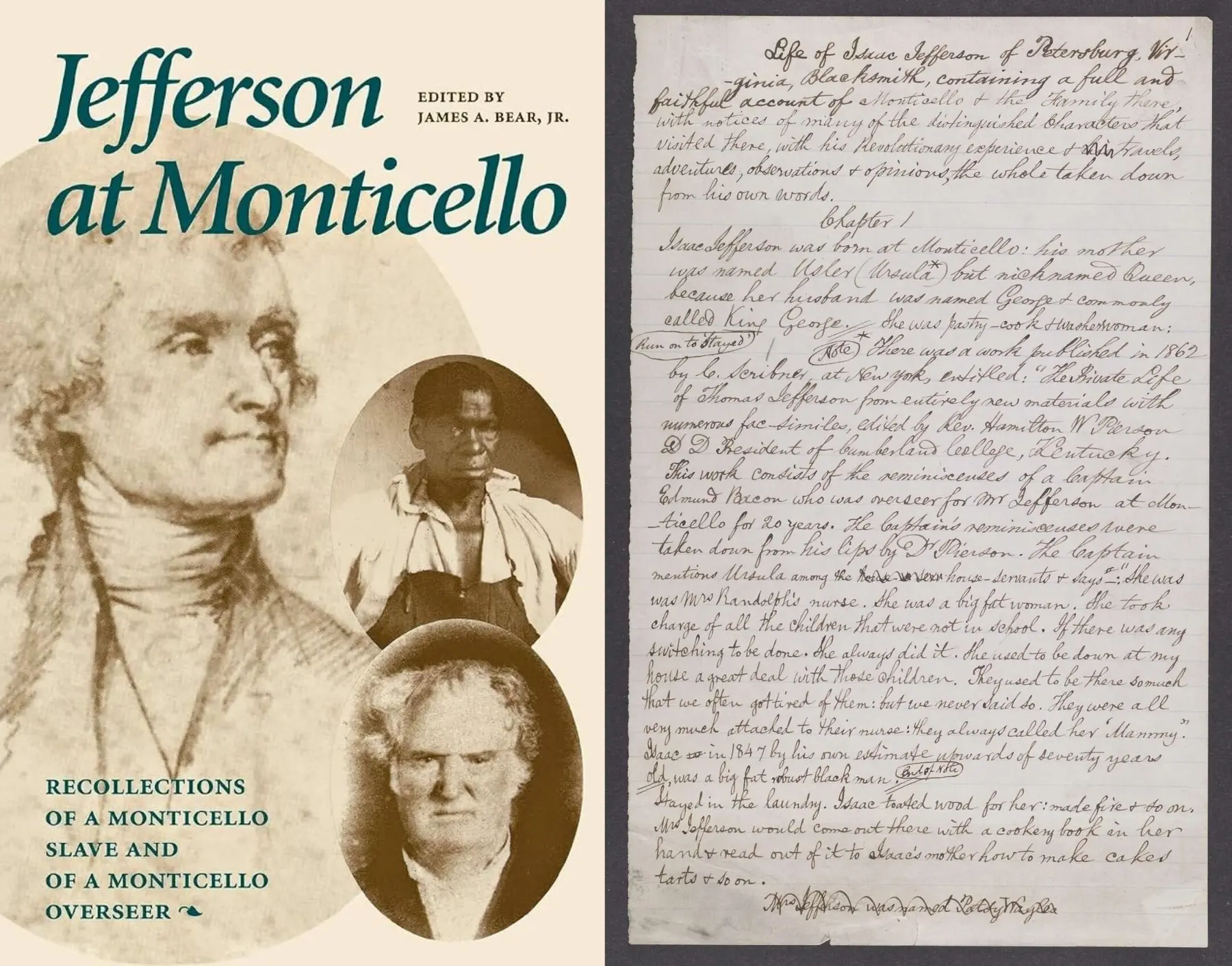
Right: "Memoirs of a Monticello Slave", circa 1840s; (c) UVA Special Collections
1970s
1970:
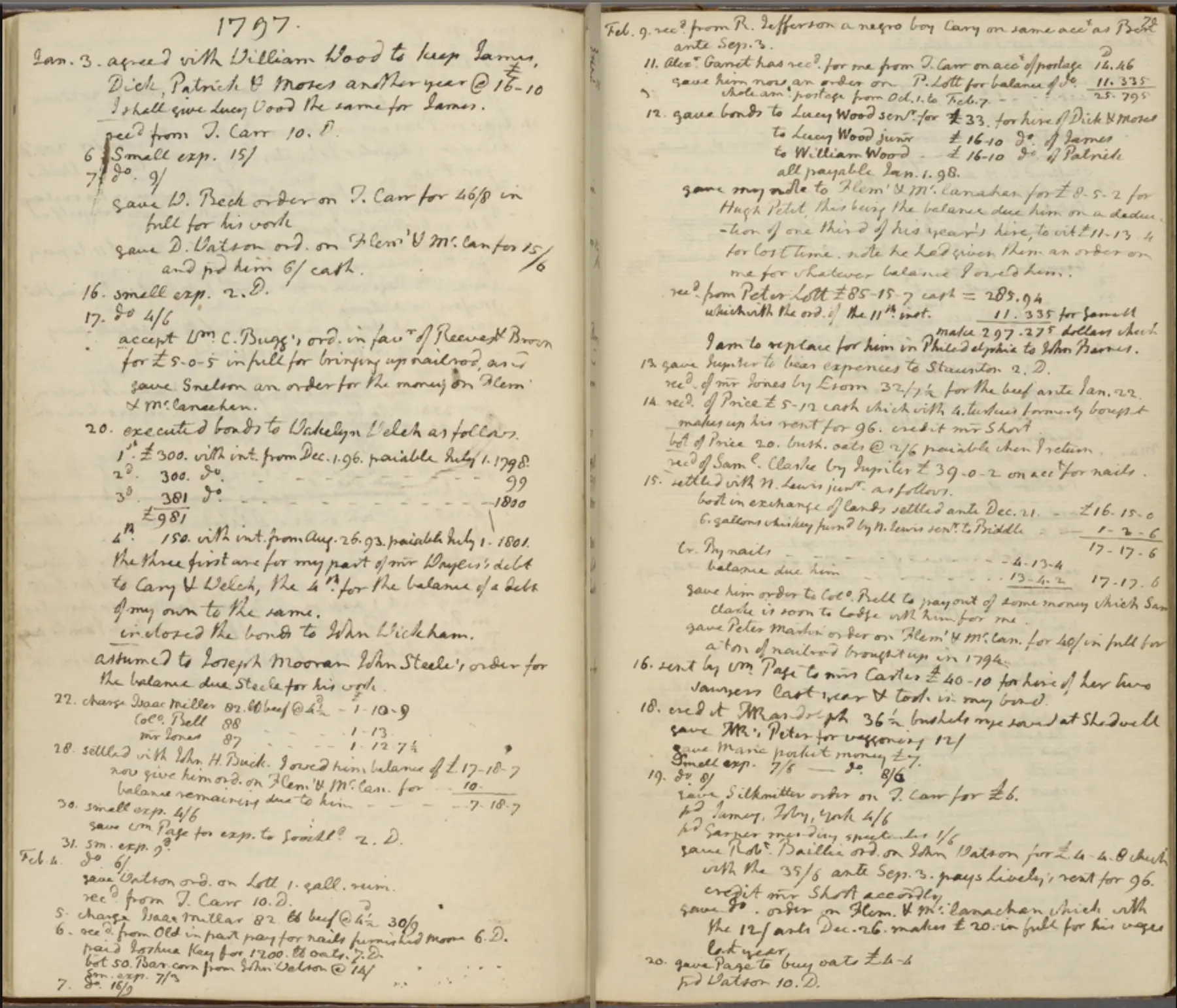
James A. Bear, Jr., Monticello Curator and later Executive Director, and researcher Lucia "Cinder" Stanton begin transcribing and annotating Jefferson’s account books, also known as his Memorandum Books.
Bear and Stanton's extensive research, completed in 1997, greatly enhances Monticello’s understanding of the work, locations, families, and lives of enslaved people, as well as their relationship with Jefferson. Stanton would devote the next 40 years of her career to studying the lives of the 610+ people owned by Jefferson in his lifetime, retiring as Monticello's Shannon Senior Historian in 2012.
1980s
1979-1986:
Monticello's Director of Archaeology from 1979-1993, William Kelso, begins the second major excavation period along Mulberry Row. Kelso locates nine additional structures on Mulberry Row, including the remains of three enslaved dwellings not detailed on Jefferson’s original plat.

Excavations of Building o ("Servant's House") facing east on Mulberry Row, 1981-1982; (c) TJF

Overview of completed excavations of Building o ("Servant's House") on Mulberry Row, 1981-1982; (c) TJF

In-progress excavation of Building i, facing east on Mulberry Row, 1986; (c) TJF

Overview of Building j (Nailery) excavations, 1982-1983; (c) TJF
1990s
1991:
The Foundation forms the Advisory Committee on African American Interpretation, assembling experts from the field of African American studies to advise on the development of tour content, guide training, and educational programs.
1993:
MARCH
Monticello launches Plantation Community Tours (now the Slavery at Monticello Tour) and weekends, the Foundation's first programming to focus on the experiences of the enslaved people who lived and labored on the Monticello plantation. Today, Slavery at Monticello Tours are offered multiple times per day, included in the price of admission, and taken by nearly 100,000 visitors each year.
DECEMBER
Monticello staff historians Lucia "Cinder" Stanton and Dianne Swann-Wright launch the Getting Word African American Oral History Project, a groundbreaking effort to record the history of Monticello's enslaved community and their descendants. Today, Getting Word is the African American history department at Monticello, and continues to uncover, preserve, and share the stories of all those who lived and labored on the mountaintop.

Dianne Swann-Wright, Beverly Gray, and Lucia "Cinder" Stanton, founders of the Getting Word African American Oral History Project, now Monticello's African American History Department, circa 1993; (c) TJF
1996:
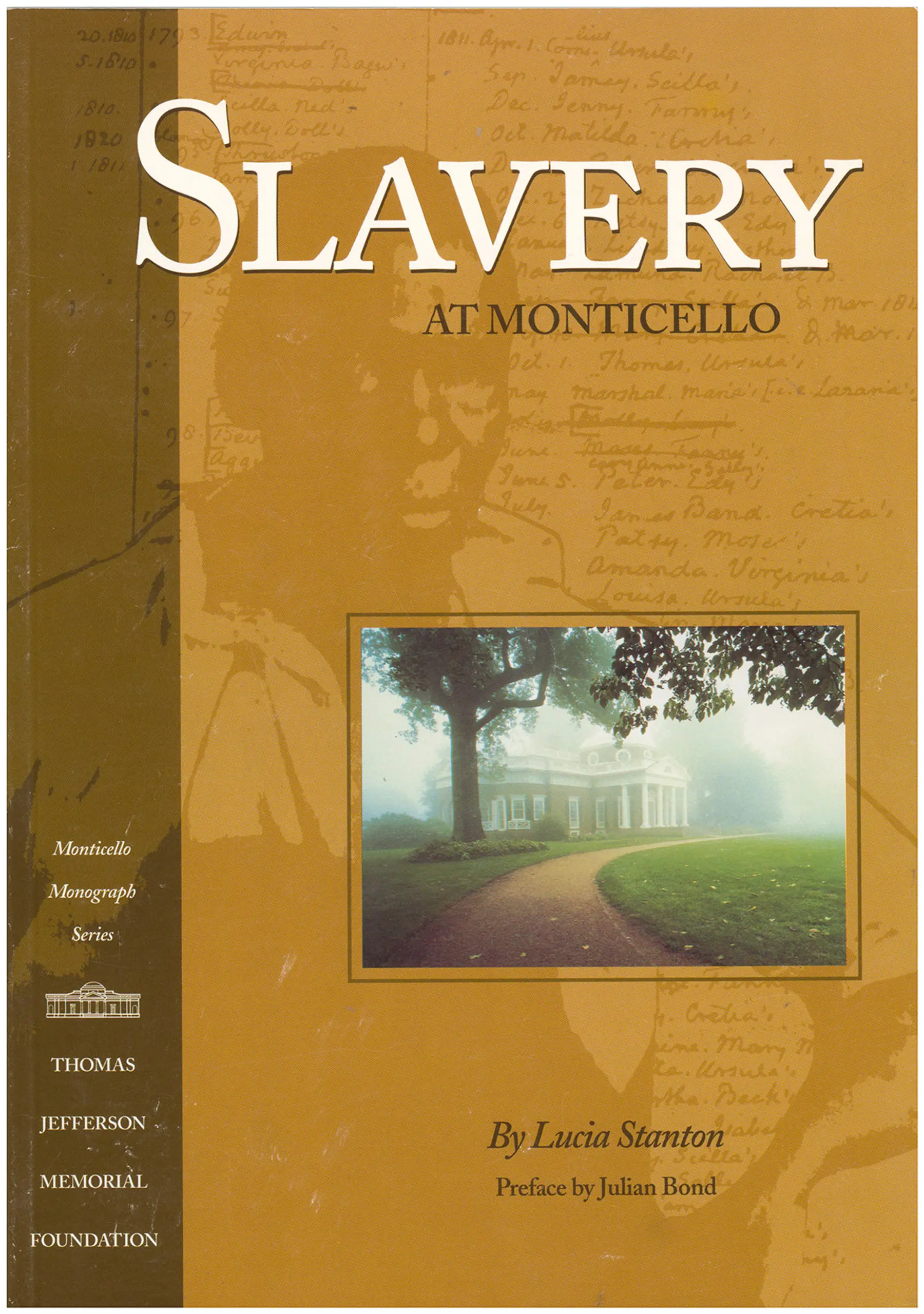
Monticello publishes Slavery at Monticello (Monticello Monograph Series) by Lucia "Cinder" Stanton, the first monograph to illuminate African American life on Jefferson’s plantation.
1997:
FEBRUARY
The Monticello Plantation Archaeological Survey begins, aiming to document and explain the settlement and land-use history of the 2000+ acres of land comprising the core of Jefferson’s Monticello.
MARCH
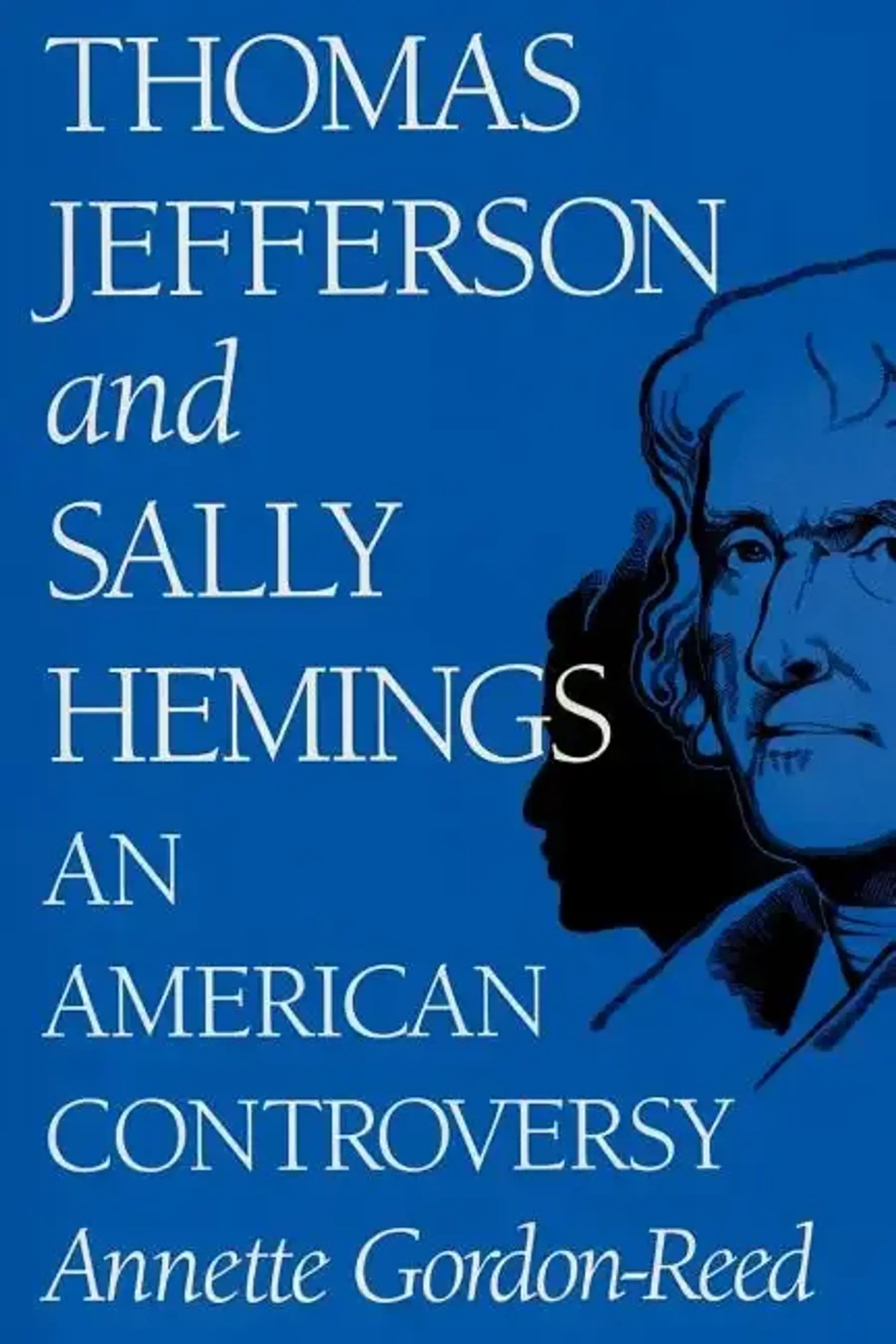
Historian Annette Gordon-Reed publishes Thomas Jefferson and Sally Hemings: An American Controversy (University of Virginia Press), a groundbreaking historical and legal study that re-evaluates the evidence surrounding the centuries-old debate.
JUNE
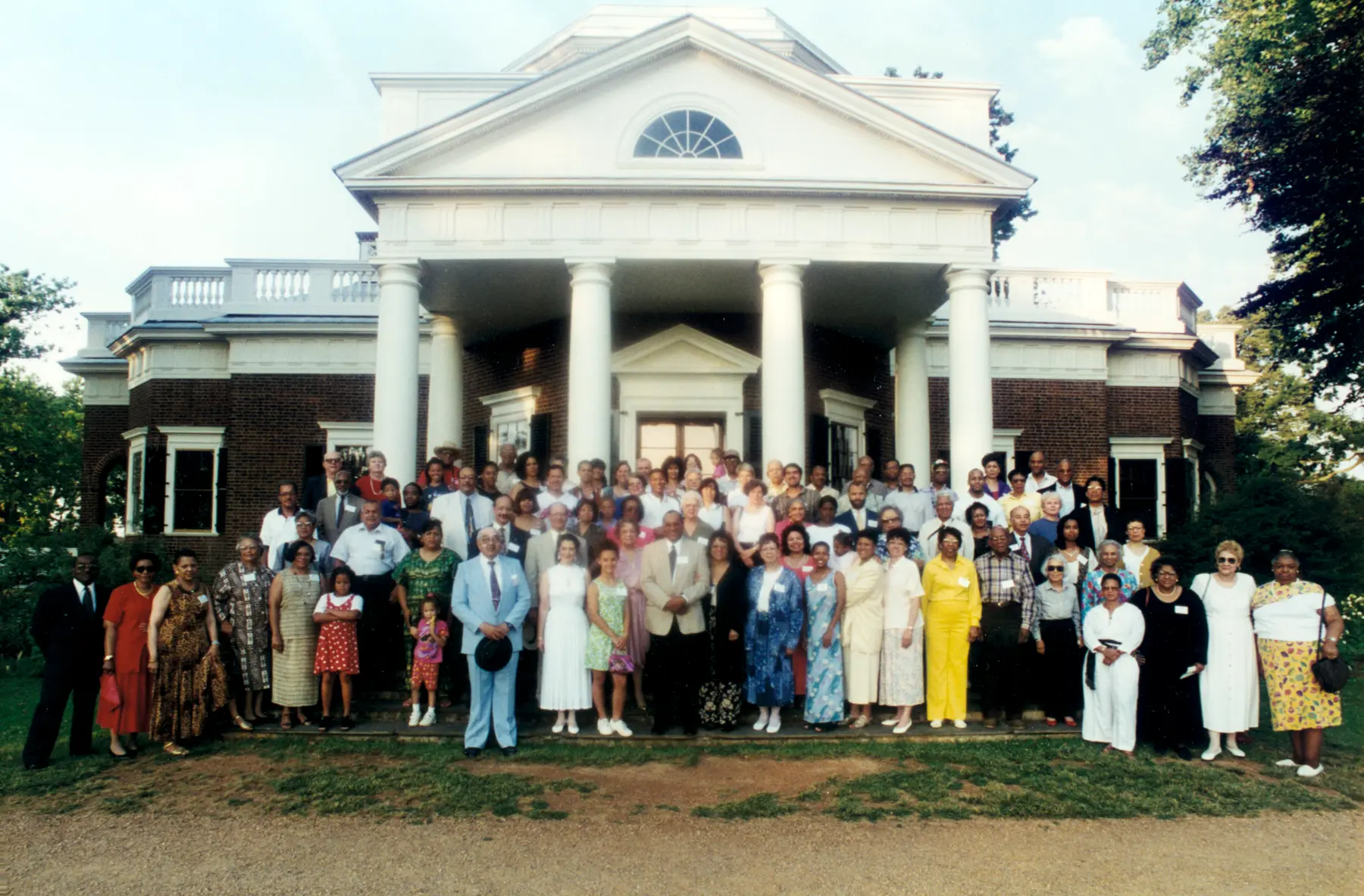
Monticello's Getting Word African American Oral History Project hosts a gathering of over 100 descendants of the enslaved community on the Monticello mountaintop.
1998:
NOVEMBER
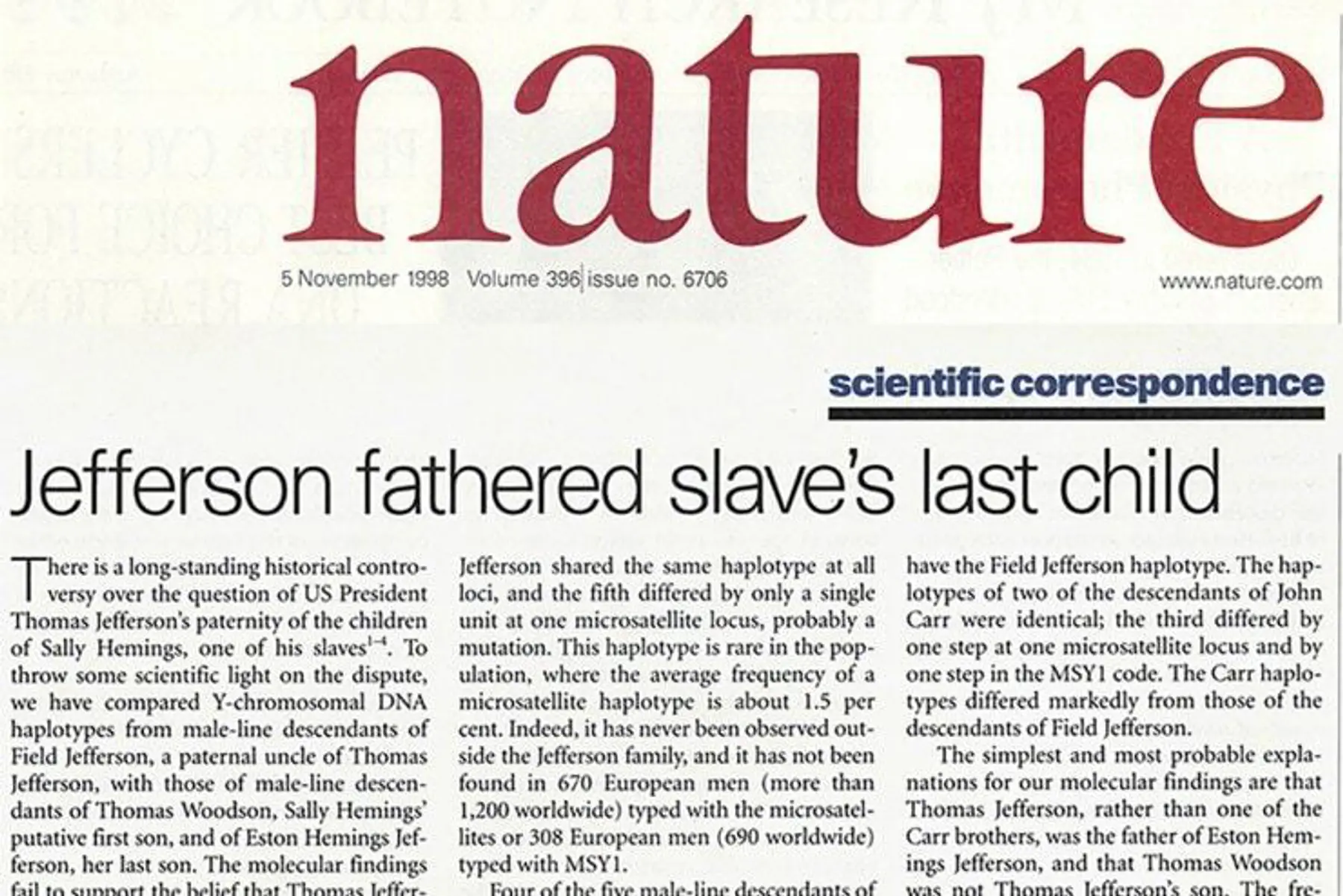
DNA tests conducted by Dr. Eugene Foster and a team of geneticists establish a genetic link between male-line descendants of the Jefferson and Hemings families. Foster and his team publish their finding in the scientific journal, Nature.
2000s
2000:
JANUARY
The Foundation publishes the "Report of the Research Committee on Thomas Jefferson and Sally Hemings", which concludes that based on oral and written historical documents, statistical studies, and DNA evidence, it is highly probable that Thomas Jefferson was the father of Sally Hemings’s children.
MAY
Monticello's Archaeology Department launches DAACS (Digital Archaeological Archive of Comparative Slavery), leading a national consortium of sites comparing archaeological evidence of slavery in North America and the Caribbean.
JUNE
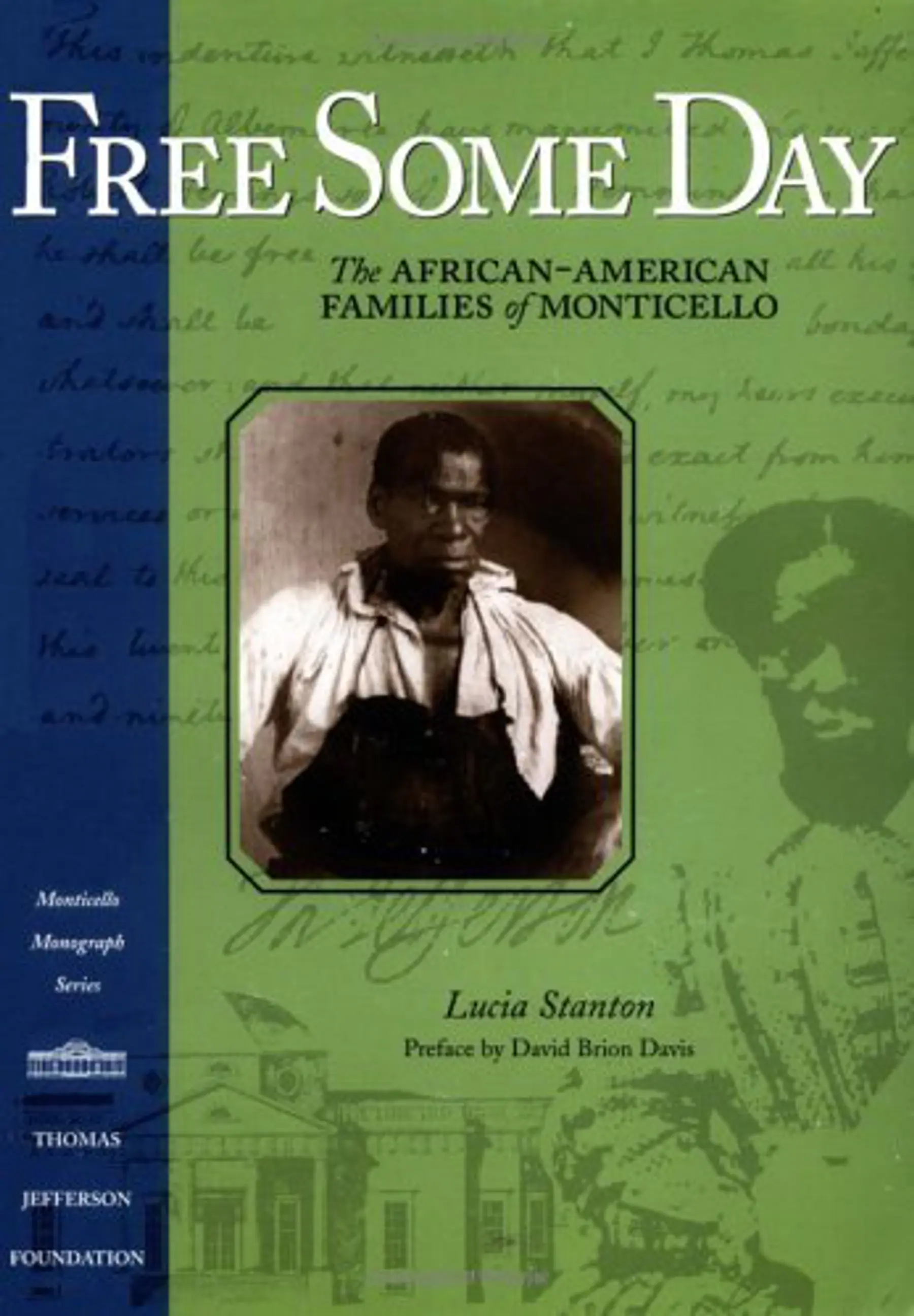
Monticello publishes Free Some Day: The African American Families of Monticello (Monticello Monograph Series) by Lucia "Cinder" Stanton. The book highlights the stories of six enslaved families who lived and worked at Monticello, drawing upon Thomas Jefferson's records, archival research, and oral history interviews with descendants of Monticello's enslaved community.
2001:
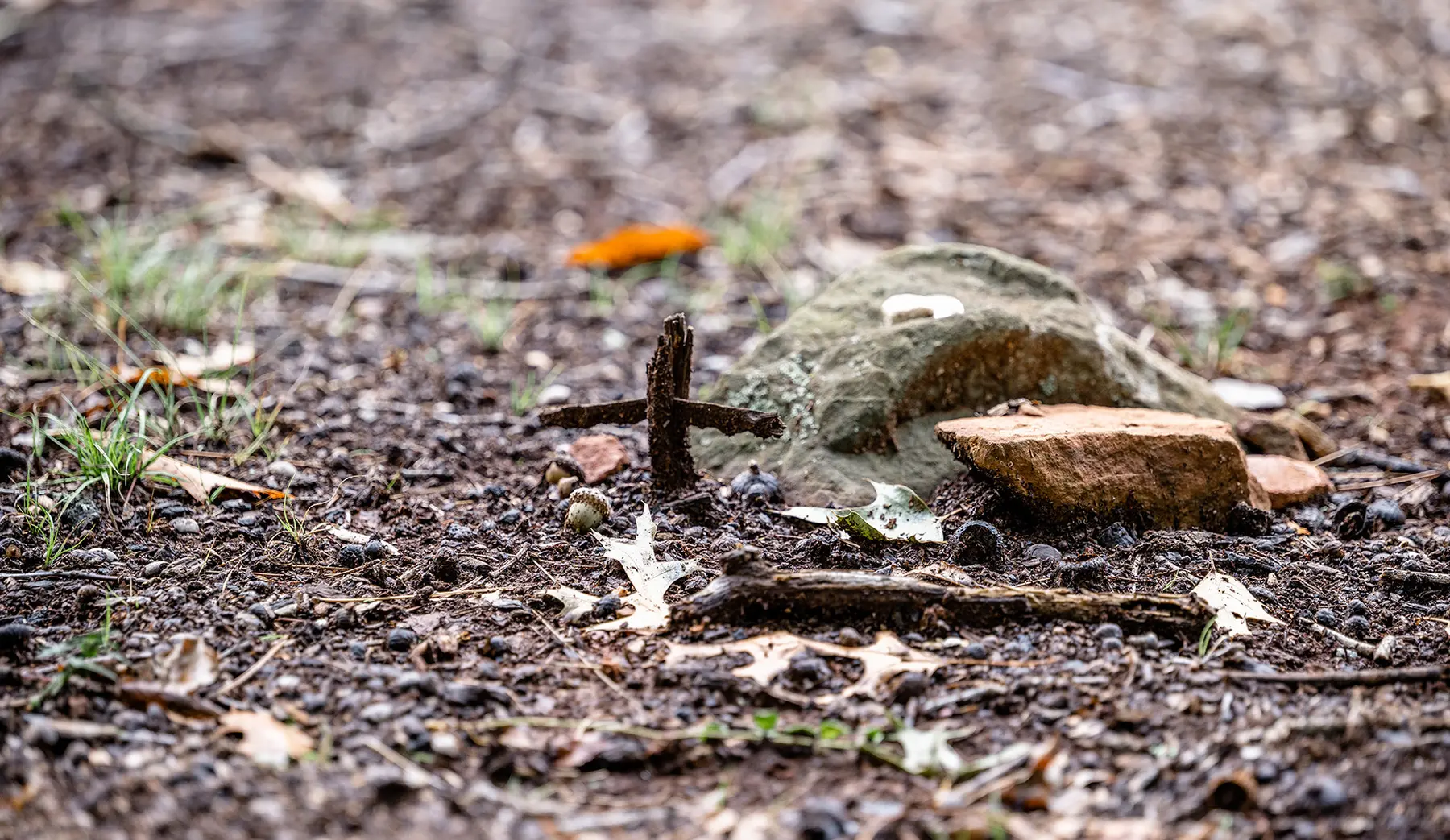
The Burial Ground for Enslaved People at Monticello is identified via archaeological work, confirming earlier oral history accounts of an African American cemetery located near the present-day Visitor Center. The Foundation held a Commemoration Ceremony in the fall of 2001, where NAACP Chairman, Julian Bond, addressed attendees. While documentary records do not reveal their names, more than 40 members of Monticello's enslaved community were buried at this site.
2005:
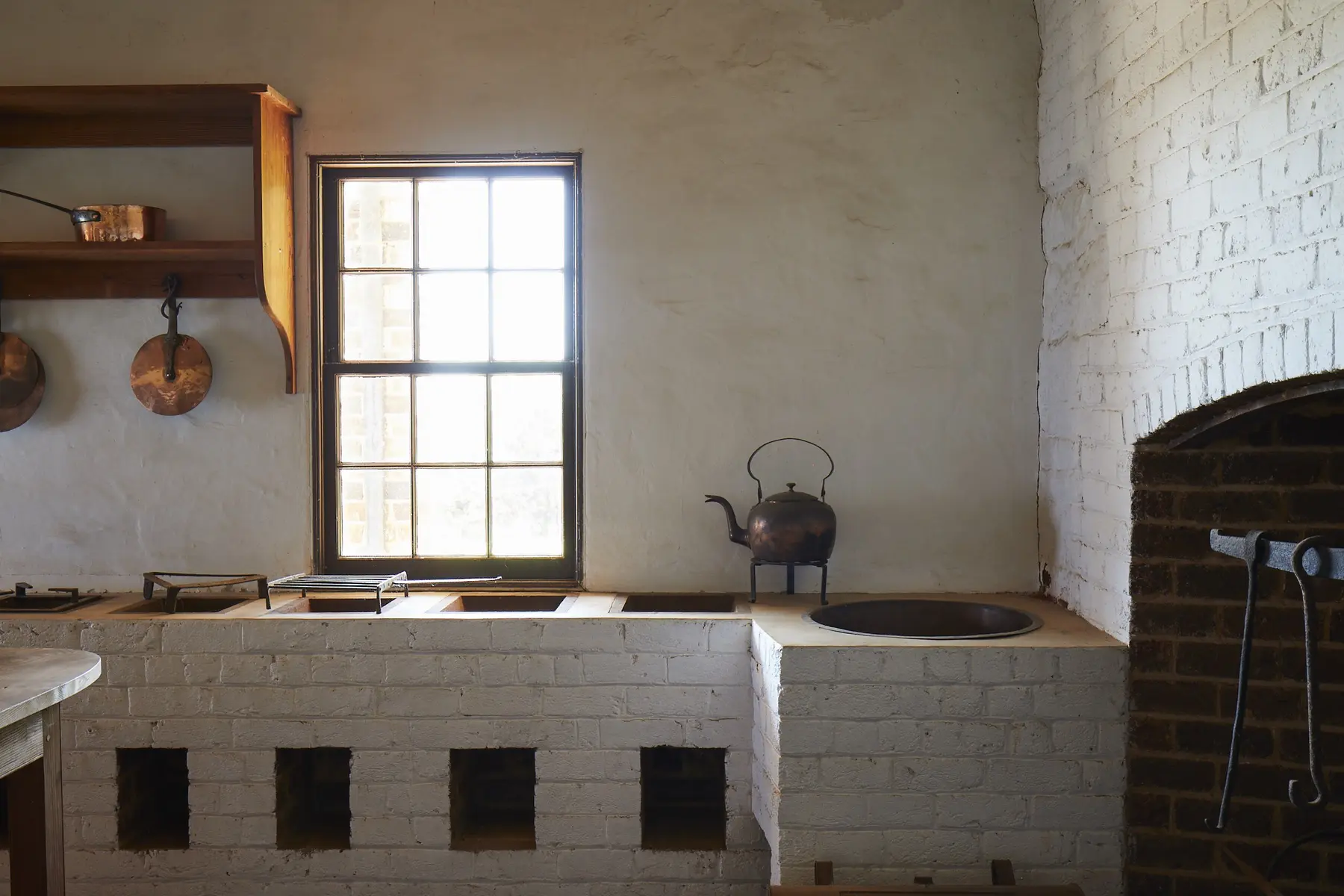
Restoration of the Post-1809 Kitchen in Monticello's South Wing is completed. Larger and far better equipped than the original kitchen in the South Pavilion, new interpretive panels installed during the restoration focus on Edith Hern Fossett and Frances Gillette Hern, two enslaved women who brought French-trained culinary expertise to the mountaintop after serving at the White House during Jefferson's presidency.
2006:
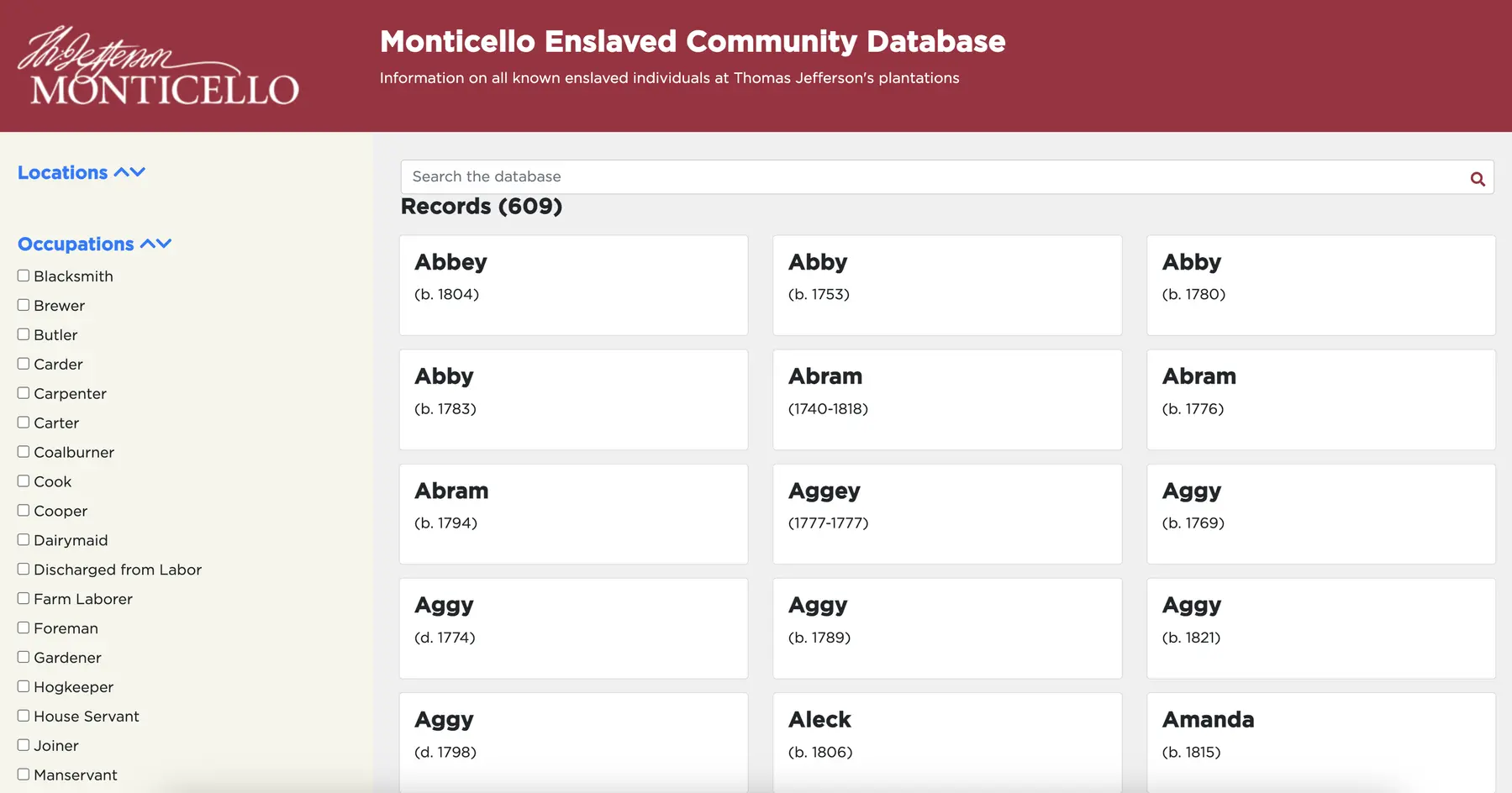
Monticello launches the Plantation Database, a searchable database of all individuals enslaved by Jefferson during his lifetime. Compiled by Lucia "Cinder" Stanton over many decades, the site includes all known family relationships, birth and death dates, and other key information.
2007:
Organized by descendants of Jefferson and the enslaved community, a Monticello community gathering is held on the Mountaintop.
2009:
The museum and introductory film, “Thomas Jefferson’s Worlds”, open at the new David M. Rubenstein Visitor Center. All of the museum exhibitions—“Making Monticello: Jefferson’s ‘Essay in Architecture’”, “Monticello as Experiment: ‘To Try All Things'”, and “Thomas Jefferson and ‘the Boisterous Sea of Liberty’"—highlight the role of slavery and enslaved people at Monticello.

2010s
2010:
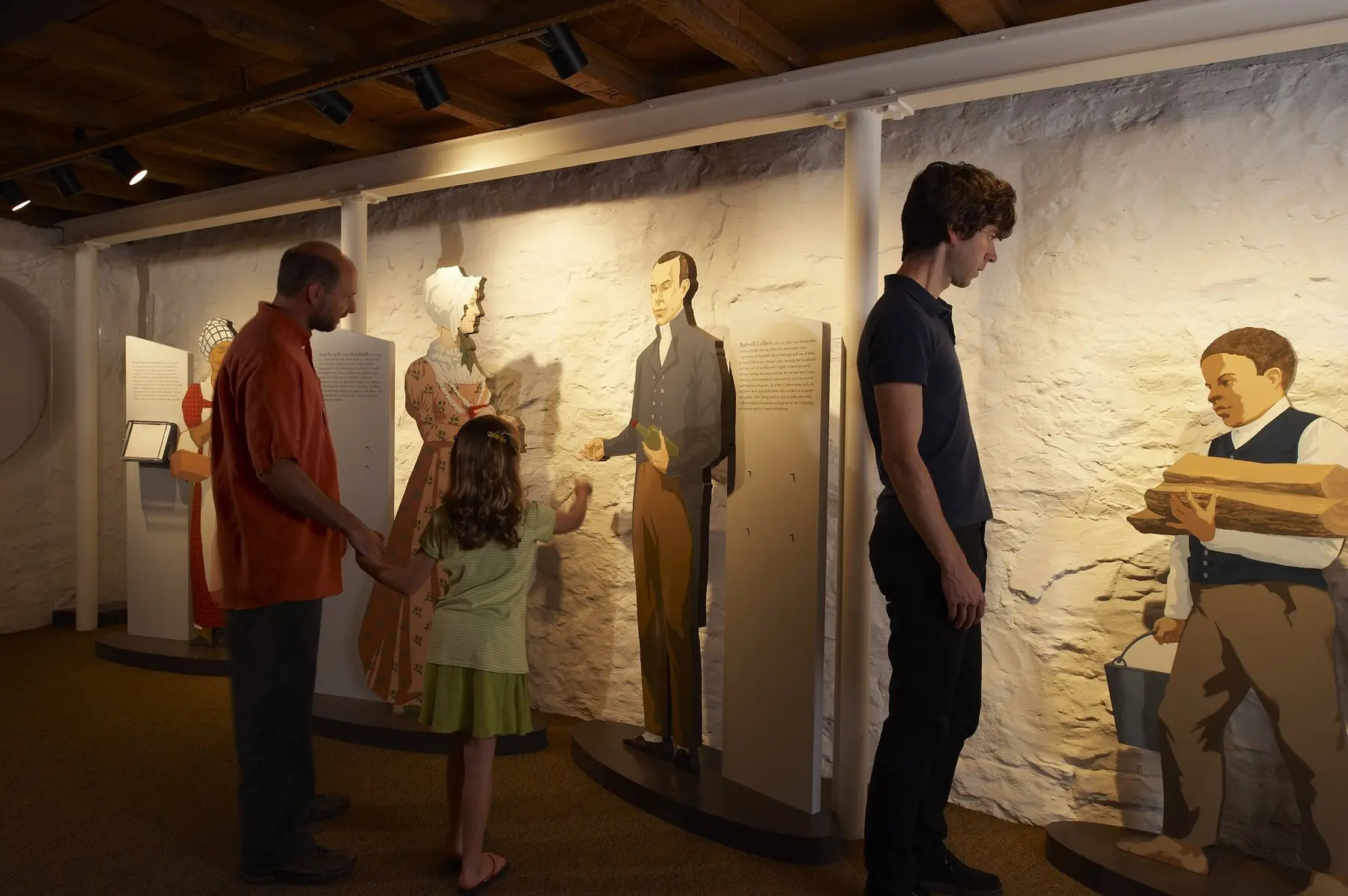
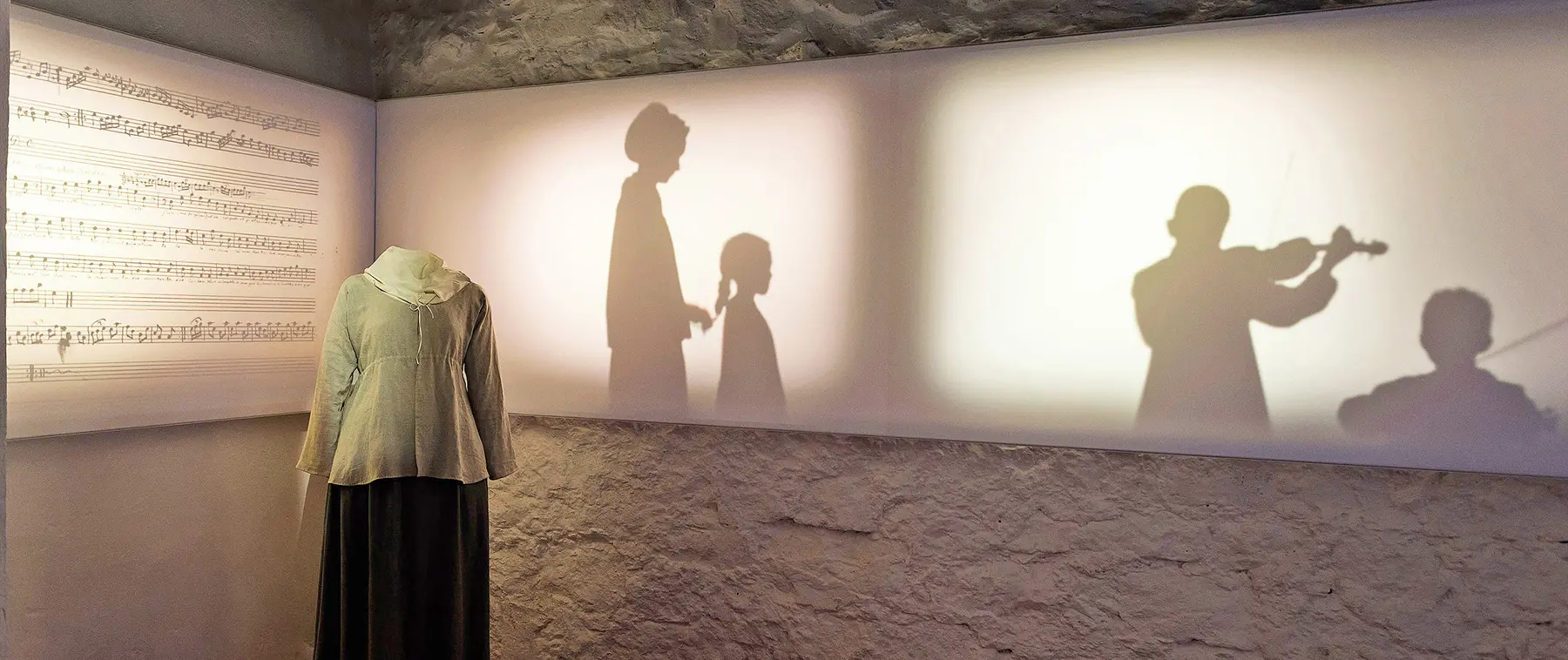
Monticello opens the "Crossroads" exhibition in the cellar of the main house. Life sized-figures of enslaved workers and white Jefferson family members demonstrate the constant interaction between free and enslaved individuals on the Monticello plantation.
2012:
JANUARY
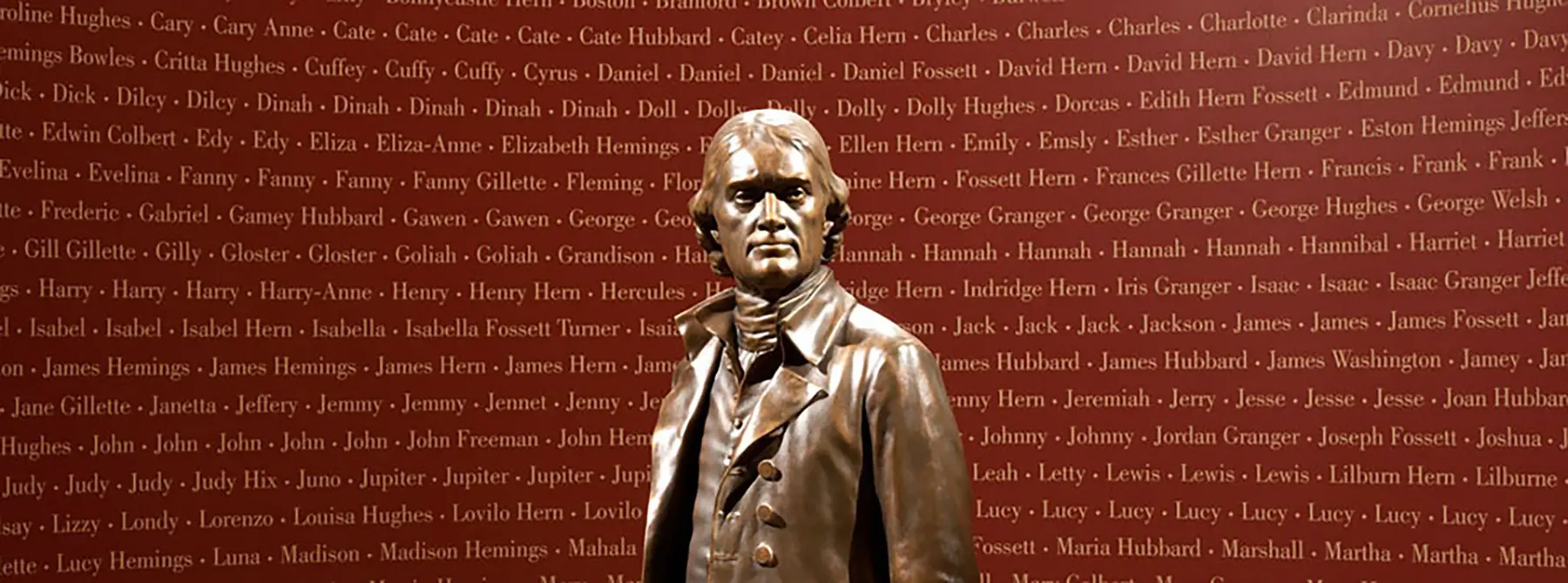
Monticello mounts a major exhibition with the Smithsonian's National Museum of African American Heritage and Culture, "Slavery at Jefferson's Monticello: The Paradox of Liberty".
The exhibition, which synthesizes over 40 years of research on slavery at Monticello, attracts 1 million on-site visitors and 1 million virtual visitors, traveling from D.C. to museum venues across the country, including Atlanta, St. Louis, and Philadelphia.
FEBRUARY
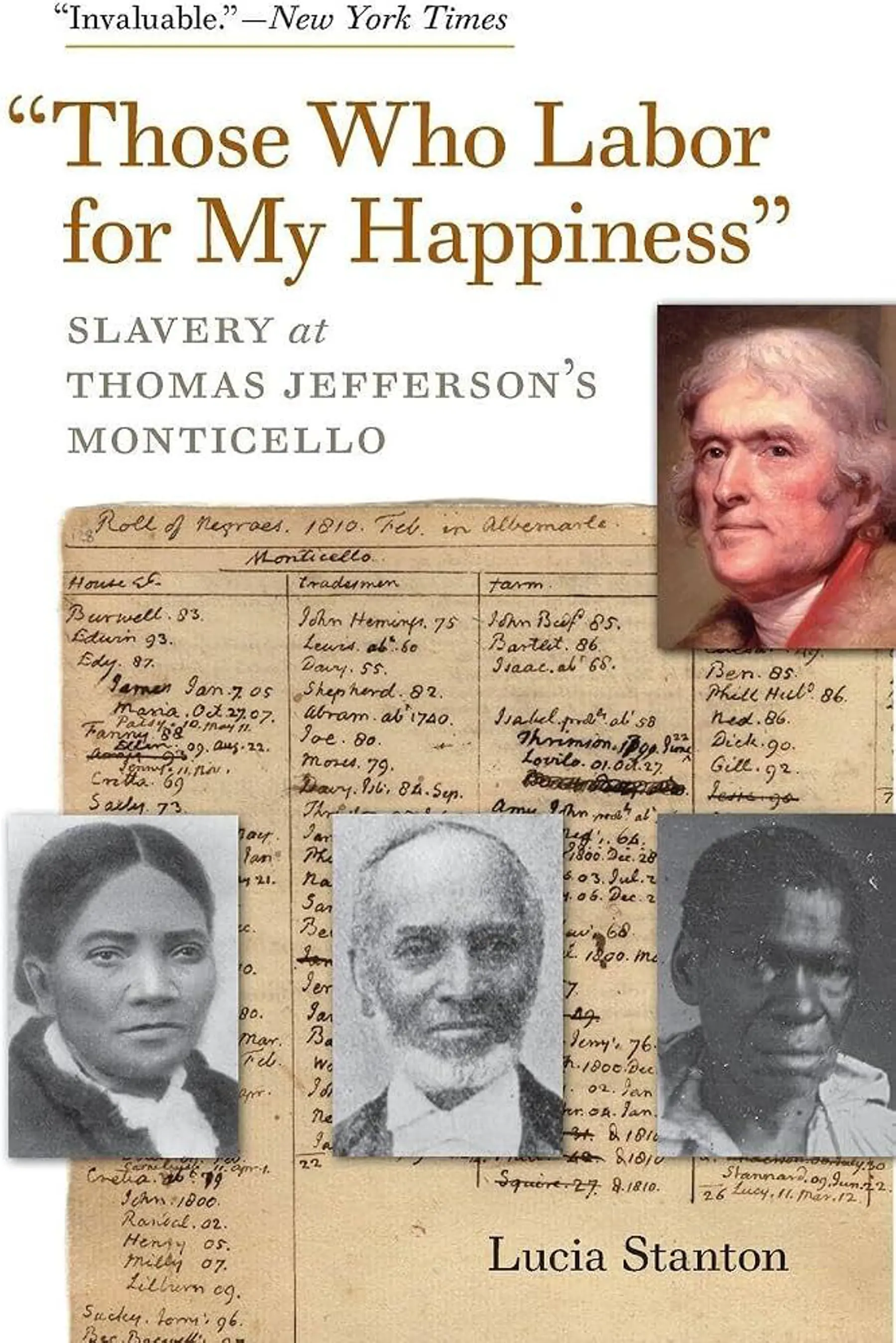
Monticello publishes Lucia "Cinder" Stanton’s "Those Who Labor for My Happiness": Slavery at Thomas Jefferson’s Monticello (Charlottesville: University of Virginia Press). Stanton’s book combines previously published essays on the enslaved families of Monticello with new work based on Getting Word oral histories that describe lives and experiences after slavery.
To coincide with the publication of Stanton’s work, Monticello also launches the first iteration of the Getting Word website.
2013:
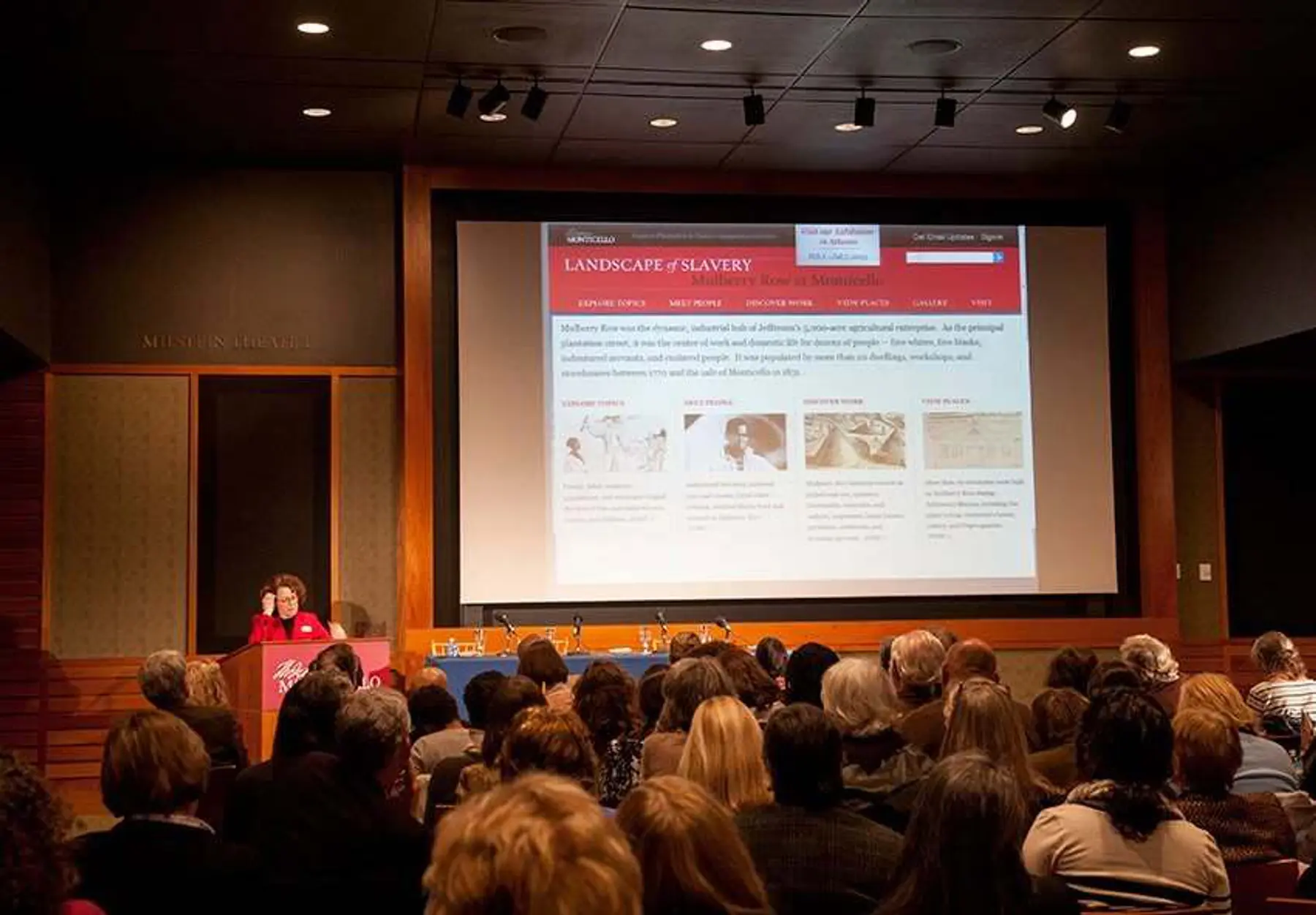
Monticello hosts a two-day symposium, “Telling the History of Slavery: Scholarship, Museum Interpretation, and the Public”. The conference focuses on how new innovations in slavery research impact academic scholarship and public interpretation at museums.
2015:
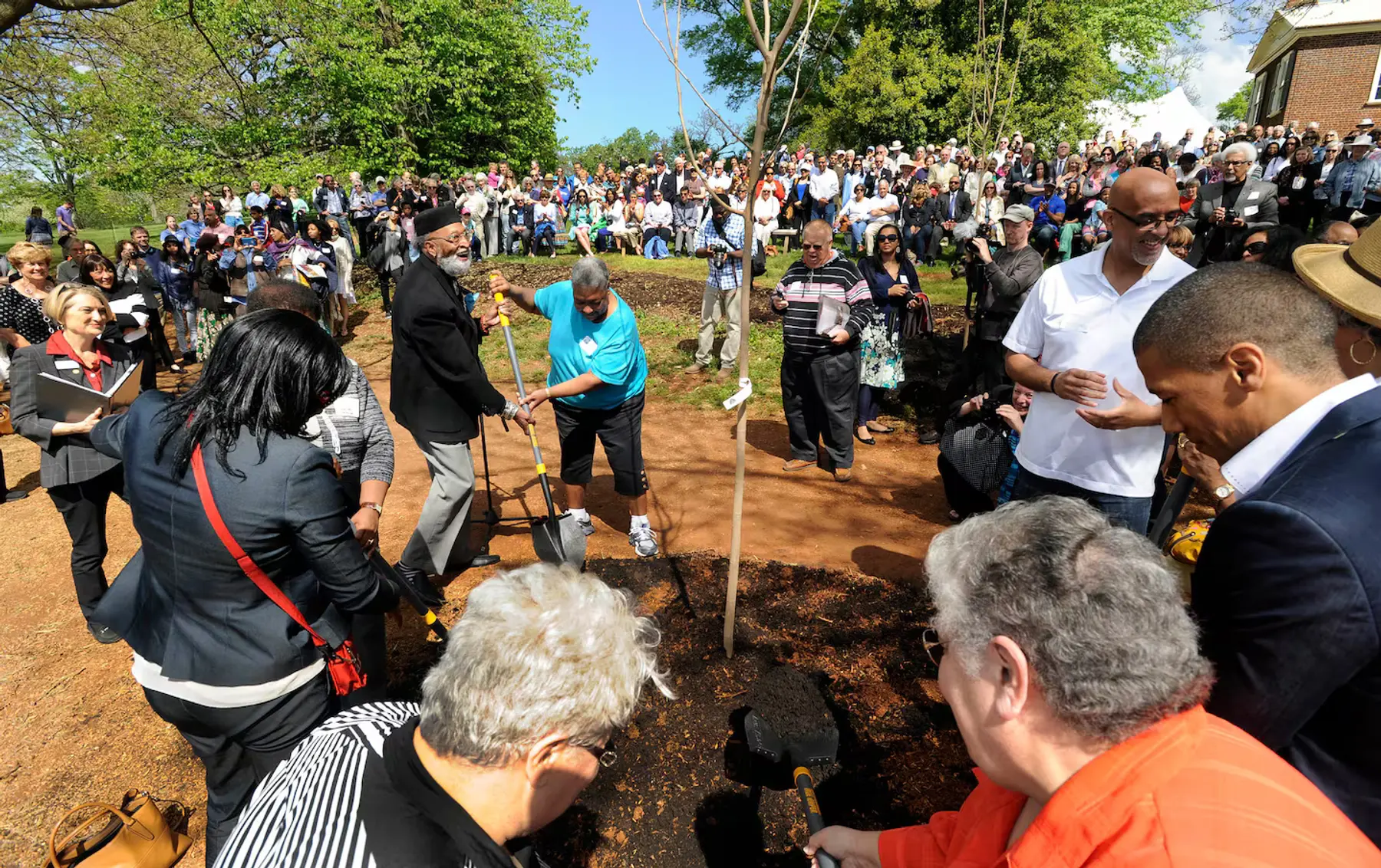
Monticello unveils the transformation restoration of Mulberry Row, which includes the recreation of two buildings connected to enslaved laborers, the “storehouse for iron” and the Hemmings Cabin. In May, over 100 descendants of enslaved families participate in a tree-planting ceremony to commemorate these new buildings.
In August, Monticello hosts the Slave Dwelling Project—an initiative that seeks to preserve and call attention to slave dwellings—for slave descendants, many of whom sleep overnight in the dwellings of their ancestors. Featuring the voices of many Getting Word participants, Monticello also launches the Slavery at Monticello app, which garners several awards.
2016:
Monticello, along with the National Endowment for the Humanities and the University of Virginia, hosts a public race summit for thousands on the West Lawn of Jefferson’s famous home. "Memory, Mourning, Mobilization: Legacies of Slavery and Freedom in America" featured leading academics like Dr. Henry Louis Gates, Jr. and Annette Gordon-Reed, artists like Nikki Giovanni, activists like Bree Newsome, descendants of Monticello’s enslaved families and community members who joined us in a discussion about learning from the past and grappling with issues that face us today.
2017:
Work begins on the restoration of the Textile Workshop and remaining spaces in Monticello’s South Wing, including Sally Hemings’s room. Monticello’s interpretation of slavery garners national coverage, including stories in the Washington Post, on NPR’s All Things Considered, and on the CBS Evening News
2018:
MARCH
Monticello, the University of Virginia, and the United States Committee of the International Council on Monuments and Sites (US/ICOMOS)—in collaboration with the United National Educational, Scientific, and Cultural Organization (UNESCO) Slave Route Project: Resistance, Liberty, and Heritage—host a two-day international conference in Charlottesville, VA, on "New Approaches in Interpreting and Representing Slavery in Museums and Sites."
JUNE
On June 16, in conjunction with national Juneteenth events, Monticello unveils "Look Closer," with exhibitions and newly restored spaces, including the opening of the South Wing and Sally Hemings’ quarters. This landmark conclusion of a major restoration initiative at Monticello also commemorates 25 years of the Getting Word oral history project. Monticello welcomes the largest reunion of descendants of Monticello’s enslaved families in modern history and hosts an original copy of the Emancipation Proclamation, generously loaned by David M. Rubenstein.
2020s
2021:
Monticello launches digital version of the Paradox of Liberty exhibition—26 of the 36 interviews in the virtual tour are new interviews with descendants of Monticello’s enslaved community.
2022:
Monticello's "Hemings Family Tour" becomes the "From Slavery to Freedom Tour" with a focus on the legacies of Monticello's Enslaved Families.
Getting Word becomes the Getting Word African American History Department within the Robert H. Smith International Center for Jefferson Studies, Monticello's Research Division.
Monticello hosts "Ascendant: The Power of Descendant Communities to Shape Our Stories, Places, and Future."
2023:
Getting Word receives $3.5m grant from Mellon Foundation to support ongoing work.
Monticello celebrates the 30th anniversary of Getting Word with the unveiling of the Mountaintop Contemplative Site with a private dedication ceremony.
Monticello hosts a gathering of descendants of Monticello’s African American Community at a reunion event at Montalto.
2024:
Getting Word hosts its first annual Black Family History Symposium at the Jefferson School Heritage Center. A full-day rendition of earlier “Memories Matter” events, the event brings together local preservationists and family historians to better preserve, locate, and share African American family stories.
2025:
Six newly discovered names of those enslaved at Monticello are added to the Contemplative Site at private re-dedication ceremony hosted by the Thomas Jefferson Foundation/Getting Word.
Learn more about the process of adding new names to the Contemplative Site.
Getting Word becomes a fully-staffed Black history research department renamed as the Getting Word African American History Department of the Robert H. Smith International Center for Jefferson Studies.
2026:
Getting Word records and surpasses 500 oral history interview participants.
Looking Ahead
2027 and Beyond:
Planned launch of DASFAM (Digital Archive from Slavery to Freedom at Monticello – beta version) for public audiences.
Monticello commemorates the 200th anniversary of the 1827 Dispersal Sale with a year-long slate of private and public programming on the topic of “Fulfilling the Declaration” and the long-term impacts of the domestic slave trade in U.S. history