Encyclopedia
Garden Book
Thomas Jefferson's Garden Book is a rich, annotated collection of his records, notations, and letters on the gardens and gardening for nearly 60 years.

Jefferson had a lifelong enthusiasm for gardening, from agricultural experiments with fruits and vegetables, to flower propagation and ornamental landscape design.
“ no occupation is so delightful to me as the culture of the earth, & no culture comparable to that of the garden”
Monticello's gardens served as a botanical showpiece, a source of food, and an experimental laboratory of ornamental and useful plants from around the world.
Thomas Jefferson's Garden Book is a rich, annotated collection of his records, notations, and letters on the gardens and gardening for nearly 60 years.
Learn more about Thomas Jefferson's vegetable garden, his scientific approach to gardening, and the cultivation techniques he used.
Monticello's vineyards were restored in 1985 and 1993 and planted to reflect Jefferson's interest in cultivation European and American grape varieties.
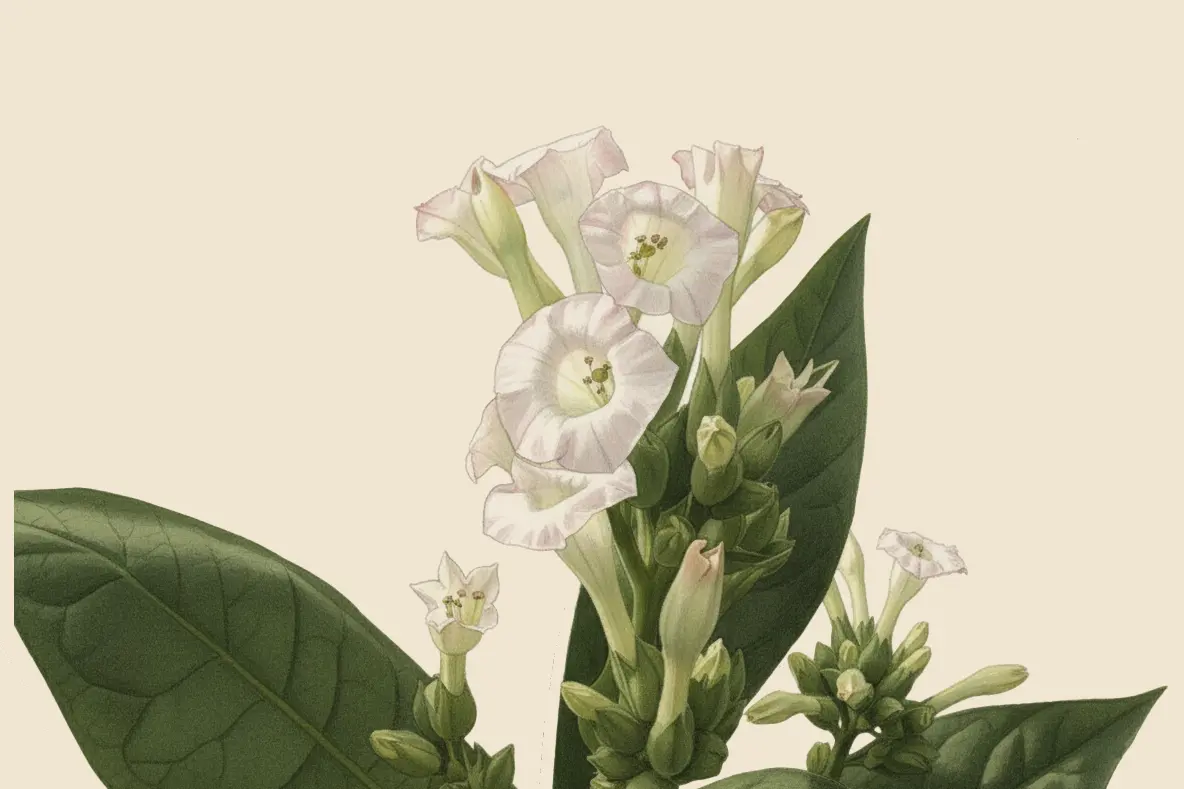
For nearly the first twenty-five years of Jefferson's ownership of the plantation, tobacco was Monticello's main cash crop and the primary activity of the enslaved workforce.
A selection of references to insects in Thomas Jefferson's correspondences compiled by Monticello researchers.
Information about the types of cash crops, produce, and livestock raised at Monticello and when certain crops were cultivated.
A collection of detailed entries about plantation accounts Jefferson recorded about his farming and industrial operations.
Thomas Jefferson considered his design for a "Moldboard Plow of Least Resistance" one of his more important contributions to agriculture in his time.
An article by Monticello researchers on plows and plowing at Thomas Jefferson's plantations.
Read about Thomas Jefferson's use of threshing machines to help improve the profits from wheat harvests at Monticello.
Getting water to Monticello's mountaintop was a persistent challenge. A well dug through 65 feet of rock failed repeatedly, leading Jefferson to add rainwater cisterns in 1808 — an imperfect solution that took years to refine.
A once-thriving area of activity at Monticello
A mill powered by canals from local streams and the Rivanna River.
Plant history in your gardens with seeds and plants from Monticello and the Thomas Jefferson Center for Historic Plants.
Find reproductions, historic plants and seeds, games and toys, wines, gourmet food products, collectibles, books, and souvenirs at the Museum Shop.
Next page in
Jefferson and . . .